
Last updated November 14, 2026
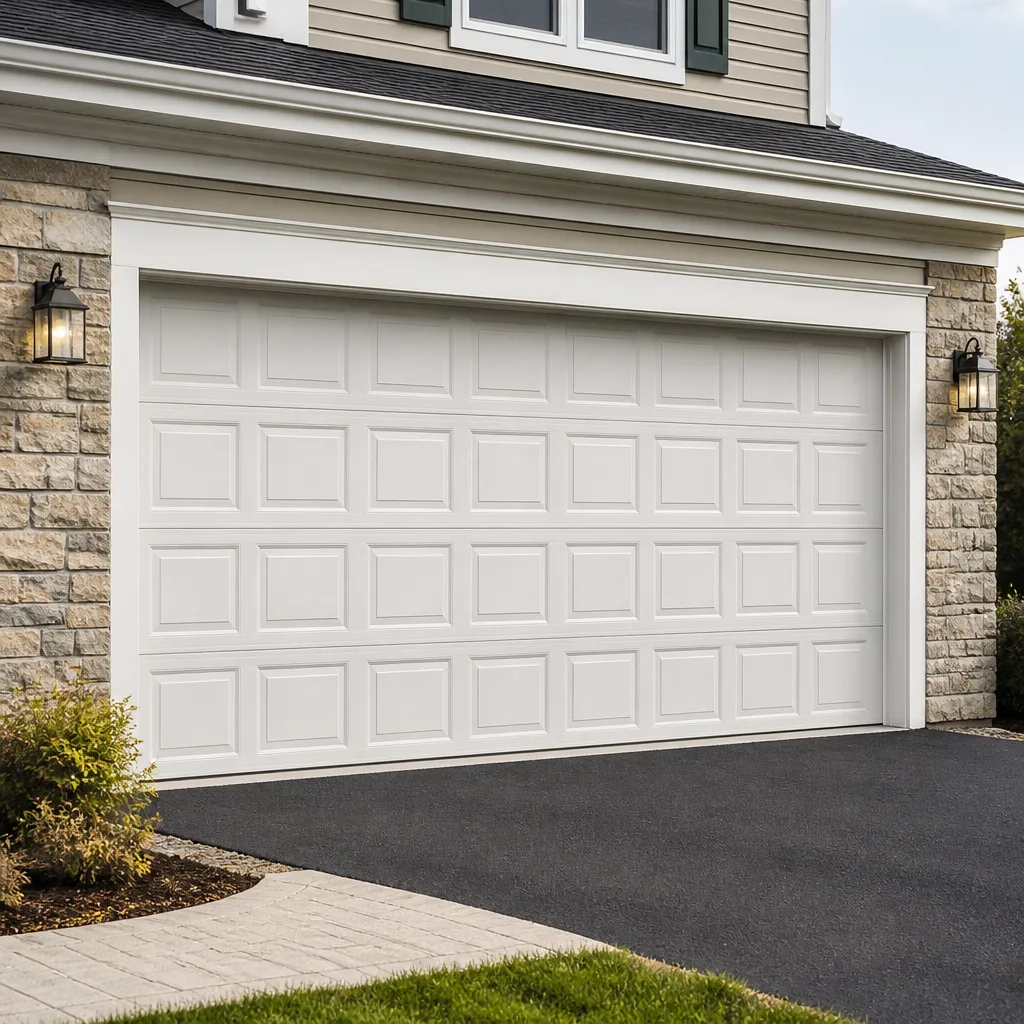 Raised-panel steel
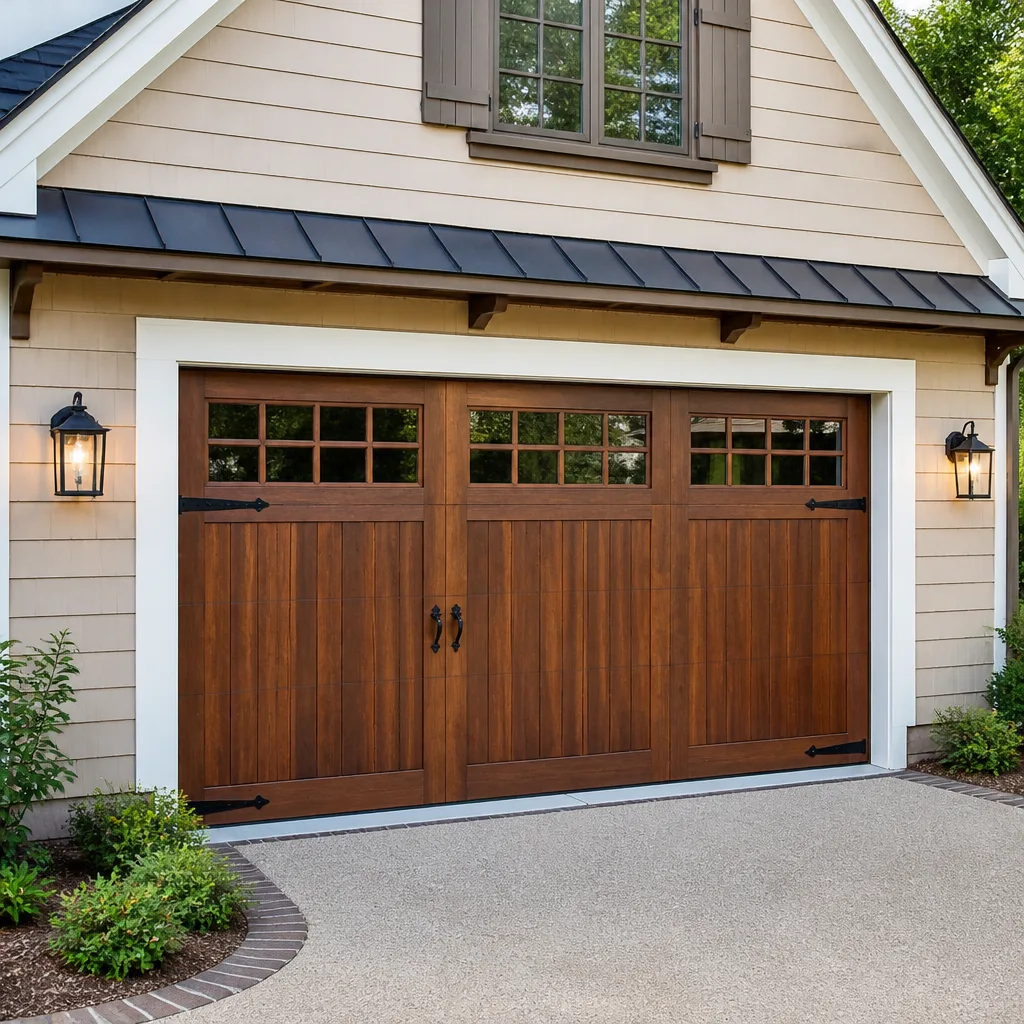 Carriage house
 Modern flush
 Full-view glass
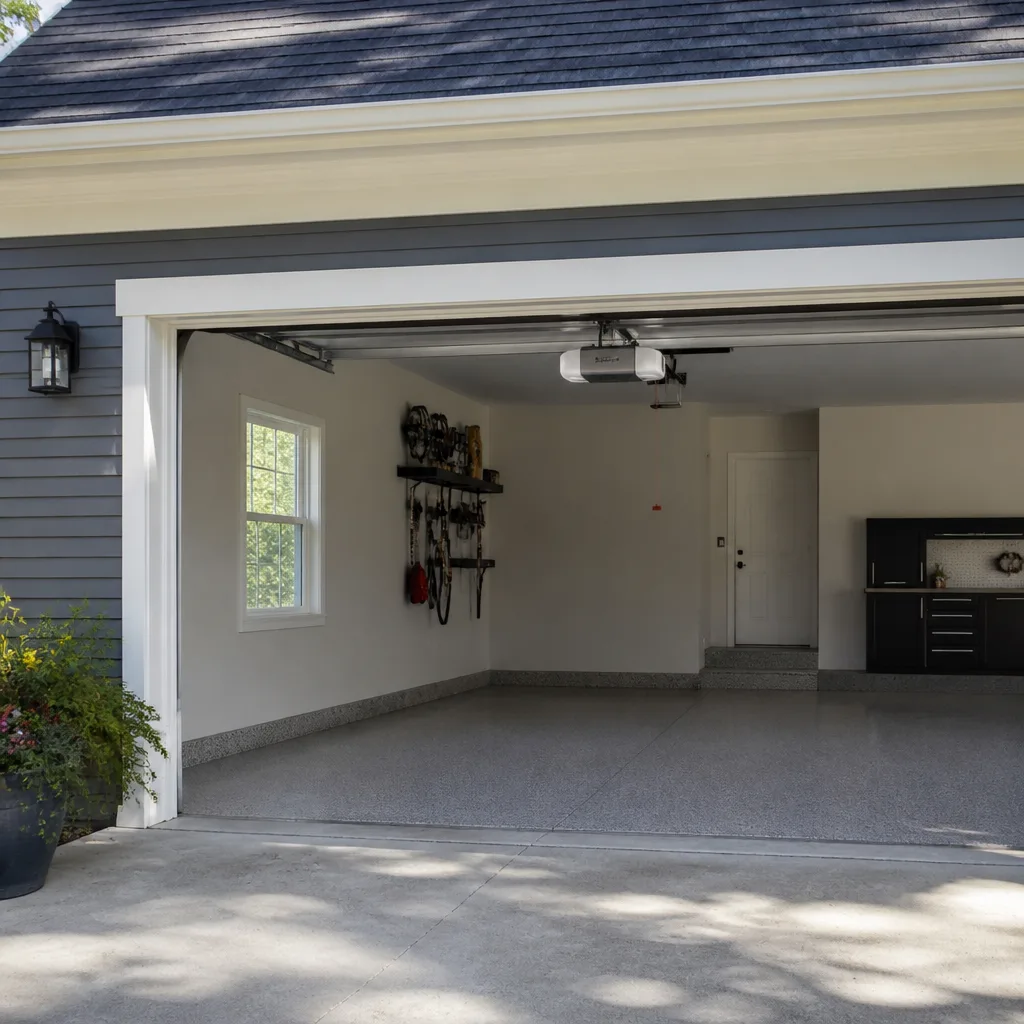 LiftMaster openers
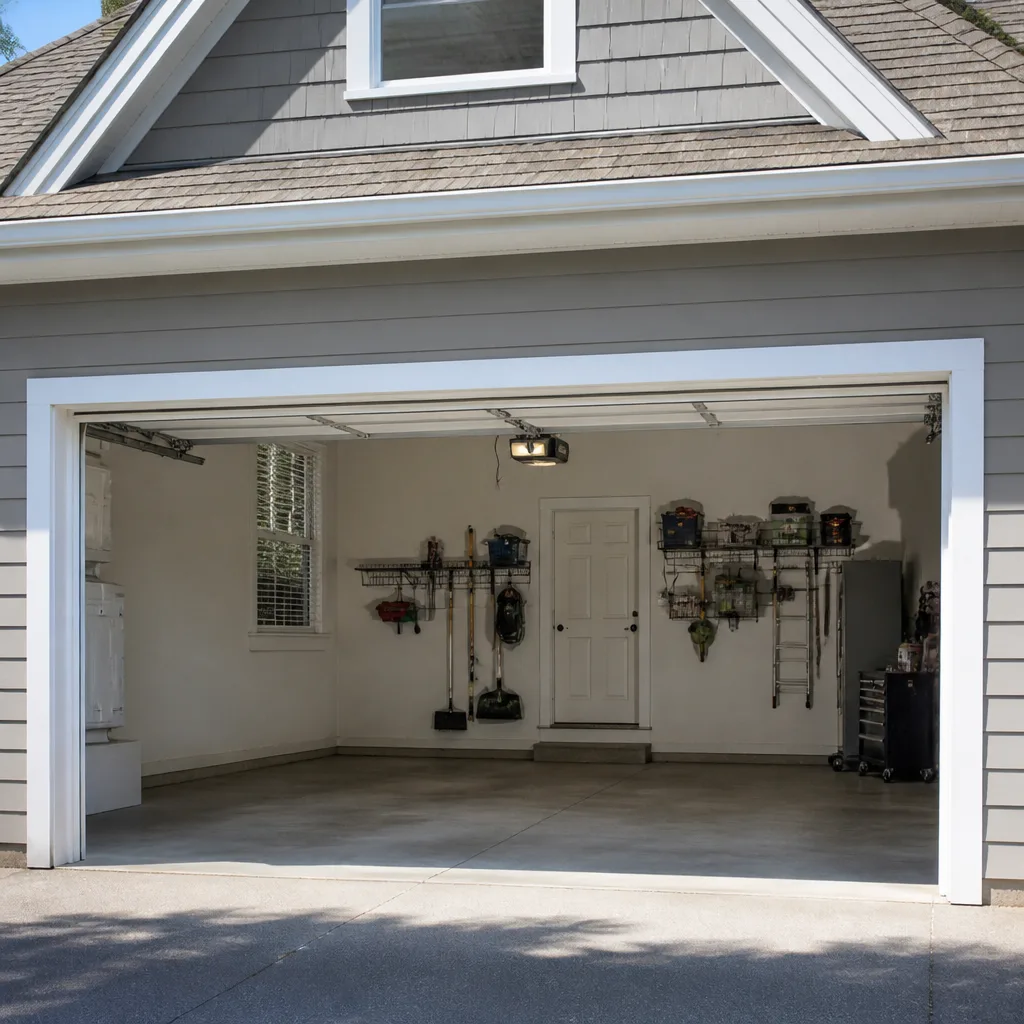 Chamberlain openers
Full 25-point door and opener safety check with every visit - springs, cables, rollers, tracks, and your LiftMaster or Chamberlain opener included
You get a price before we start. It does not change when the truck arrives.
Get your free estimateDIY vs Professional Garage Door: The Oklahoma City Homeowner’s Decision Guide
Most people think the DIY-versus-pro question comes down to how handy they are. It doesn’t. It comes down to stored energy. A torsion spring under tension holds enough force to break bones, and that reality lives in the same conversation as changing weatherstripping, which takes ten minutes and a utility knife. This guide separates the tasks that are genuinely safe to do yourself from the ones where no amount of YouTube confidence changes the physics. We’ll walk through the specific jobs, the risks, what Oklahoma City’s climate does to certain fixes, and the hidden math of doing it wrong the first time.
Quick Answer
Safe DIY garage door tasks in Oklahoma City include weatherstripping replacement, sensor realignment, lubrication, and battery changes. Leave torsion springs, cable work, and structural track repair to a professional – those components hold dangerous stored energy. The smartest approach is handling maintenance yourself and calling a specialist for anything involving tension, weight, or safety systems.
Styles & brands we work with
- Raised-panel steel
- Carriage house
- Modern flush
- Full-view glass
- LiftMaster openers
- Chamberlain openers
Table of Contents
- Safe DIY Tasks: What You Can Handle
- Never DIY: The Danger List
- Oklahoma City Climate and Your Garage Door
- The True Cost of DIY: Tools, Time, and Corrections
- The Middle Ground: Prep Work vs. Pro Verification
- After a Storm: What Not to Touch
- Common Mistakes to Avoid
- When to Call a Professional
Safe DIY Tasks: What You Can Handle
Some garage door maintenance is genuinely low-risk and well within a careful homeowner’s reach. These tasks don’t involve bearing weight, releasing tension, or working near components that can snap. They’re about prevention and minor adjustment, and doing them yourself in Oklahoma City makes sense given how often dust and heat cycles affect door hardware.
Weatherstripping Replacement
The rubber seal along the bottom of your door cracks and flattens over time, especially after Oklahoma summers. Replacing it is straightforward: remove the old strip, slide in the new one, trim to length. No special tools beyond a utility knife and maybe a flathead screwdriver. This is the kind of task we encourage homeowners to handle themselves because it’s genuinely simple and the materials are inexpensive.
Lubrication
A garage door that sounds like a rusty gate usually just needs lubrication. Spray a silicone-based lubricant on the hinges, rollers, and the torsion spring itself. Do this every six months in Oklahoma City because the dry heat accelerates friction wear. What you should not use is WD-40 – it’s a solvent, not a lubricant, and it’ll wash away what little grease remains. White lithium grease on the opener rail and silicone on the door hardware is the right combination.
Sensor Alignment
If your door reverses for no reason or won’t close at all, the photo-eye sensors near the floor are often the culprit. Check that both sensors face each other and their indicator lights glow steadily. A nudge to realign them usually fixes the issue. This is a five-minute fix that doesn’t require touching anything dangerous. Just be gentle – the brackets bend easily.
Visual Inspections
You don’t need tools to walk around your door once a month and look for cracks in the panels, fraying on cables, rust on springs, or loose bolts on hinges. Catching these early means calling a specialist before a small problem becomes a door that won’t open at all. In Oklahoma City’s climate, rust appears faster than in drier regions, so monthly checks are worth the five minutes.
Battery Replacement in Remotes and Keypads
When your opener remote gets weak, the battery is almost always the answer. Same for wireless keypads. Pop the cover, swap the battery, test it. This is about as safe as changing a TV remote battery and requires zero expertise.
Never DIY: The Danger List
Now we have to be clear about the other side of the line. Some garage door components store enough energy to cause life-altering injury, and no tutorial changes that. These are jobs where even experienced technicians treat the component with respect, and where we recommend a trained professional every time.
Torsion Springs
This is the big one. The torsion spring above your door is wound tight enough to hold the entire weight of the door. If it snaps while you’re working on it, the released energy can strike with enough force to break bones or worse. Professional technicians use specialized winding bars and follow a specific sequence for a reason. A snapped spring also means the door can’t be lifted safely by hand – the spring is what counterbalances the weight. This is never a DIY job.
Cables and Cable Drums
The cables on either side of the door run through pulleys and wrap around drums at the top. They’re under constant tension from the door’s weight and the spring’s counterbalance. When a cable frays or comes off the drum, the remaining tension can whip the cable unpredictably. Removing or adjusting cables requires knowing how to relieve that tension safely, which means understanding the whole system. We’ve seen what happens when a homeowner tries to re-seat a cable without releasing the spring tension first, and it’s not worth finding out for yourself.
Structural Track Work
The vertical and horizontal tracks guide the door’s rollers. If a track is bent or knocked out of alignment, the door can bind mid-travel or jump the track entirely. Straightening a track often means loosening the mounting brackets while the door’s weight hangs on the system. If you release the wrong bolt, the door can shift suddenly. This is another job where the risk comes from weight and unpredictability more than anything else.
Section Replacement and Panel Damage
Replacing a dented panel seems simple until you realize the adjacent panels, hinges, and struts all connect under tension. The door’s full weight distribution changes when you remove one section, and getting it wrong leaves you with a door that racks or binds. This is specialized work with brand-specific fastener patterns and alignment tolerances. Whether you own a Clopay or a Wayne Dalton door, the replacement panel has to match the exact model and generation, and that’s where brand knowledge matters.
Opener Motor Replacement
The opener itself sits on a motor rail above your car, wired into both your home’s electrical system and the door’s mechanical system. Replacing one means matching the opener’s force settings to the door’s weight, programming travel limits, and setting safety reversal properly. A Genie opener and a LiftMaster opener program differently, and a mis-set force limit means a door that doesn’t reverse when it should – a genuine safety hazard. This is a job for a specialist who knows the brand you own.
Oklahoma City Climate and Your Garage Door
Oklahoma City’s weather creates specific problems that generic online tutorials don’t account for. The summer heat regularly pushes past 100 degrees, and winter nights drop below freezing. That swing stresses every material on your door, and some DIY fixes fail faster here than they would in more temperate climates.
Adhesive and Sealant Failure
When a homeowner in Oklahoma City applies a peel-and-stick weatherstrip or adhesive-backed seal in July, the heat can soften the adhesive within days. What held at 75 degrees in the tutorial video peels off at 105 degrees on a west-facing door. Professional installation uses mechanical fasteners or industrial adhesives rated for the temperature range your door actually experiences. If you’re doing weatherstripping yourself, install it in milder weather or use screws where the product allows. If you’ve already tried a self-applied seal and it failed once, the fix isn’t more of the same product – it’s a different attachment method.
Metal Fatigue in Heat Cycles
The springs, cables, and hardware on an Oklahoma City garage door expand and contract daily through the summer. Metal fatigue sets in faster here than in stable climates. A spring that’s five years old in Oklahoma City has endured more thermal cycling than an identical spring in Chicago. That’s why local technicians recommend checking springs for gaps or rust more frequently than the national average, and why the “lifespan” numbers on generic websites often don’t match what Oklahoma City homeowners actually experience.
Dust and Sensor Issues
Oklahoma dust settles on photo-eye sensors faster than people expect. If your door starts reversing for no reason, a clean sensor usually fixes it. Use a dry microfiber cloth – don’t spray cleaner directly on the lens. This is a safe DIY fix, but one Oklahoma City homeowners need more often than tutorials suggest.
Storm Season Stress
Severe weather in Oklahoma City means high winds that push against the door’s face while it’s closed. That lateral force works the track brackets and hinges loose over time. Checking and tightening visible bolts is fine to do yourself, but if the door looks bowed or the tracks have moved, that’s structural damage that needs a professional assessment.
The True Cost of DIY: Tools, Time, and Corrections
The hidden math of DIY garage door work is where a lot of Oklahoma City homeowners get surprised. The part seems cheap – a $40 spring kit online – but the full calculation includes tools you don’t own, time you don’t have, and the cost of fixing what went wrong.
Tool Acquisition
Most homeowners own a screwdriver and a hammer. Almost no one owns winding bars, which are the specific tools required to safely tension a torsion spring. Substitute a screwdriver or pry bar and you’re holding an improvised tool against a component that can shatter your hand. The proper bars cost money, the proper cable puller costs money, and if you only use them once, you’ve spent more than the professional’s labor would have cost.
The Hidden Time Investment
A two-minute tutorial video doesn’t account for the hour you spend watching it, the trip to the hardware store, the wrong part you bought the first time, the second trip, and the three hours of figuring it out. What a specialist does in 45 minutes – because it’s the only thing they do – takes a first-timer all afternoon. And if you’re working on a door that carries your only car, a half-finished job means a car stuck in the garage overnight.
The Correction Call
Here’s the number that matters most: when a DIY repair goes wrong, the professional’s invoice almost always includes undoing the DIY work before starting the repair. That’s not a penalty – it’s the reality of working on a system where a misrigged cable or a half-released spring creates an unsafe starting point. The correction call costs more than the original fix would have. That’s not a sales pitch. It’s the math of how garage door systems fail.
When DIY Saves Real Money
None of this means you should call a pro for everything. Weatherstripping, lubrication, sensor cleaning, battery swaps – these genuinely save money when you do them yourself. The savings come from tasks that don’t involve tension or weight. The problem is when savings from safe tasks get applied to dangerous ones, and that’s where the calculation breaks.
The Middle Ground: Prep Work vs. Pro Verification
There’s a useful middle zone between full DIY and full professional work. These are tasks you can start or prepare, but they benefit from a technician verifying the result before you live with it.
Steps You Can Take
- Document the symptoms. Before you call anyone, note what the door does: Does it grind? Does it stop halfway? Does the remote work but the wall button doesn’t? Write it down.
- Check the obvious. Confirm power to the opener, test both remotes, check the lock button on the wall console. Half of opener issues are operator error or dead batteries.
- Lubricate and listen. A quick lubrication often changes the noise profile enough to pin down where a problem lives. If the sound improves, you’ve narrowed it.
- Measure and photograph. For a panel replacement, photograph the door from straight on and from the inside, including any model labels. The more information a technician has, the faster the diagnosis.
- Test the auto-reverse. Place a 2×4 flat in the door’s path and close it. If the door doesn’t reverse on contact, mark that as a priority fix. This is a safety check you can do monthly.
What to Leave for Verification
- Spring tension balance. A professional can test whether your springs are balanced by disconnecting the opener and lifting the door manually. If you try this yourself, the test itself is fine – but if the door slams or won’t lift, stop and call someone.
- Track alignment after a bump. If the door has been hit by a car or wind, tracks can be subtly out of true. A technician uses the door’s travel pattern to diagnose this in minutes.
- Sensor wiring. If sensors are aligned but the door still reverses, the problem may be a wiring fault between the sensor and the motor. Tracing low-voltage wiring through walls is where a specialist’s diagnostic equipment earns its keep.
After a Storm: What Not to Touch
Oklahoma City sees severe weather every spring. After a tornado or windstorm, the garage door may look fine and still hide structural damage. Here’s what matters.
If the door took a direct hit or wind debris struck it while closed, the panels may have flexed beyond their design limit even if they snapped back. The torsion assembly can be knocked out of balance, cables can be stretched, and track brackets can be partially sheared. A door in this condition may open and close several times before failing completely, often while your car is underneath it.
What you should not do is try to straighten, pull, or force anything. Don’t try to re-seat a cable that’s slipped. Don’t hammer a track bracket back into place. Don’t attempt to lift the door manually. The entire system’s counterbalance math may have changed, and the next movement could be the one that sends a cable whipping or the door dropping.
After any severe weather event in Oklahoma City, call for a professional inspection even if the door seems to work. We answer 24/7, and fast dispatch from 7am to 7pm, Sunday through Friday means someone from Bellmont Garage Door Repair can check your door before a small crack becomes a dropped door. This is one of those times where the cost of an inspection is dramatically less than the cost of the failure it prevents.
See the difference
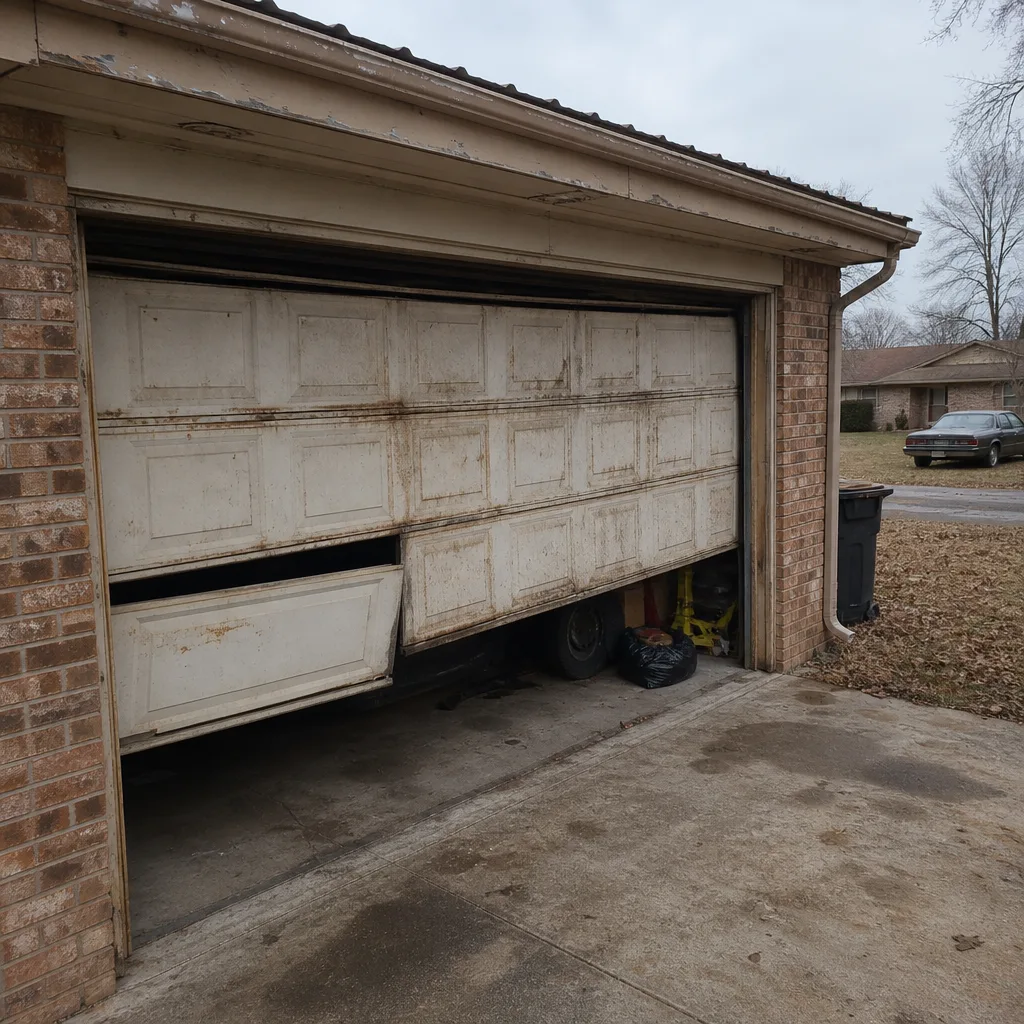 Before
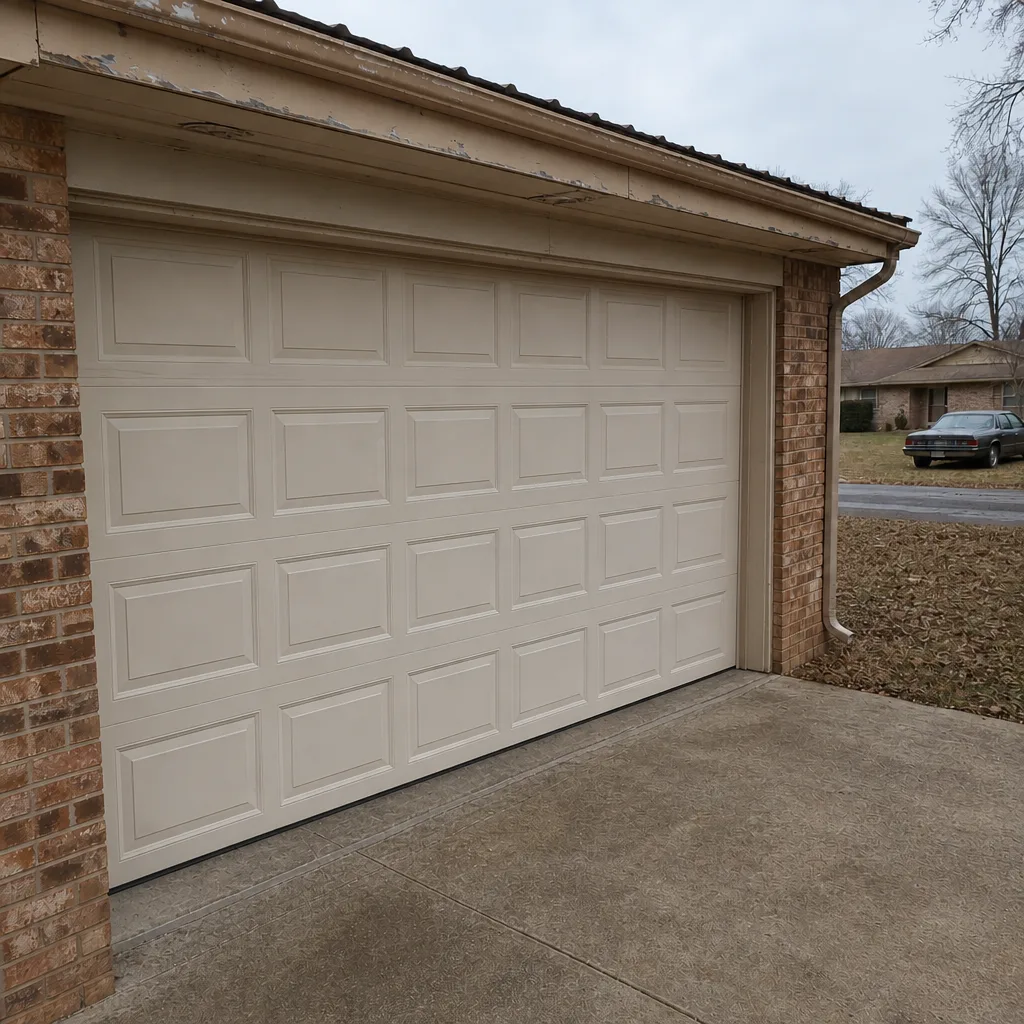 After
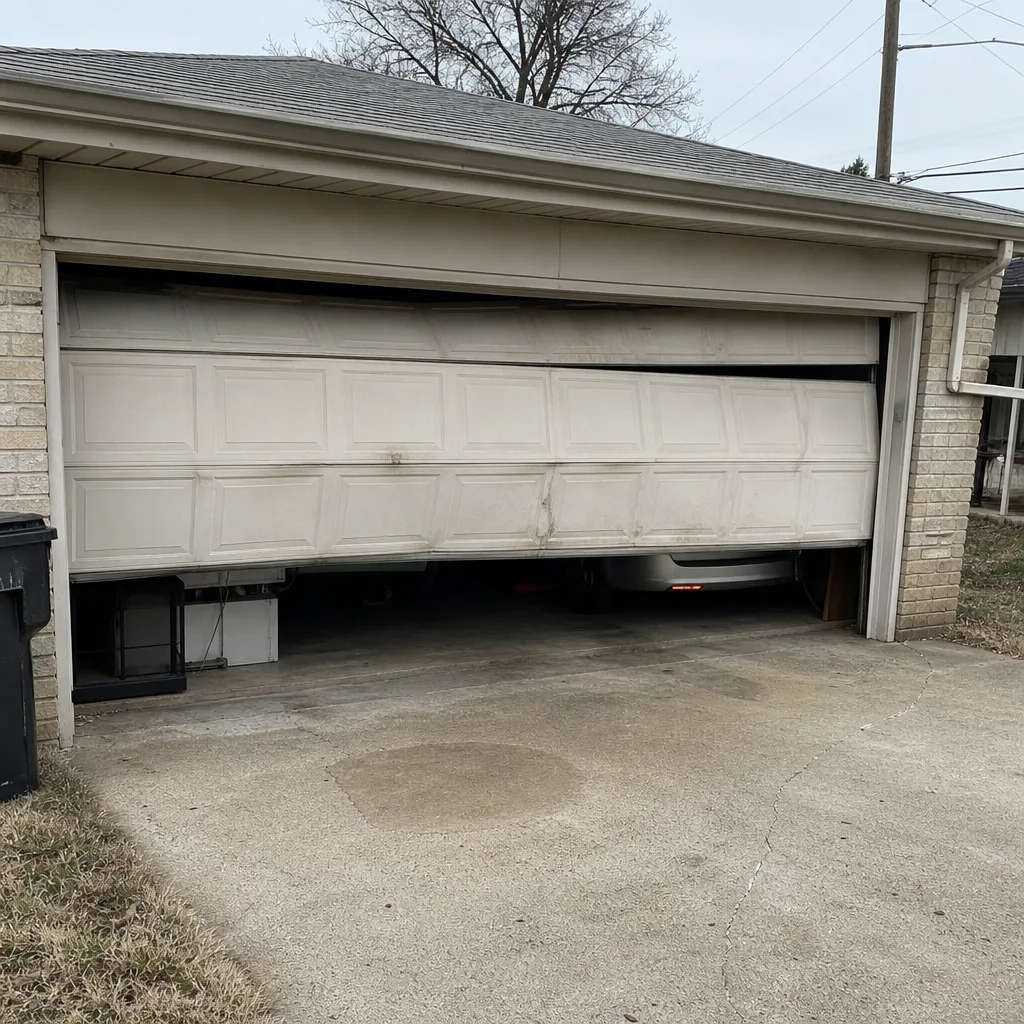 Before
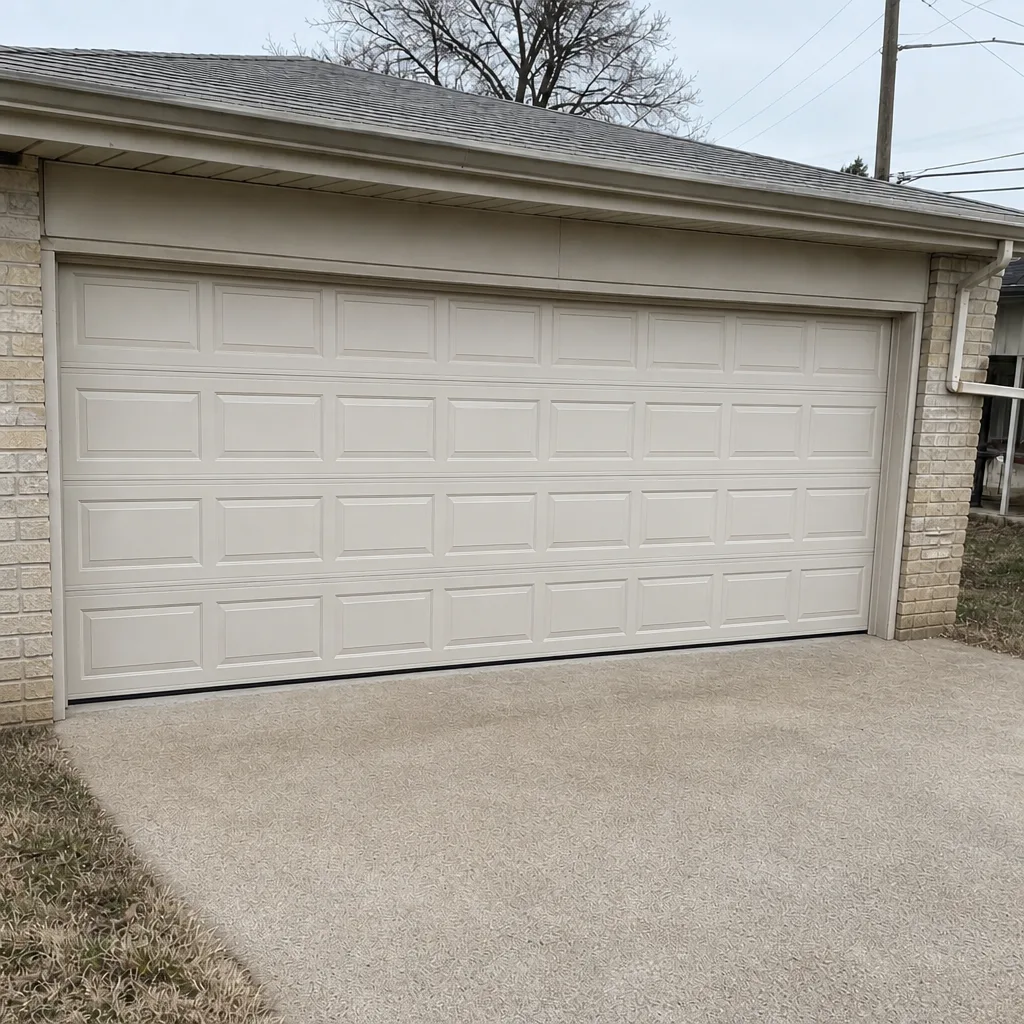 After
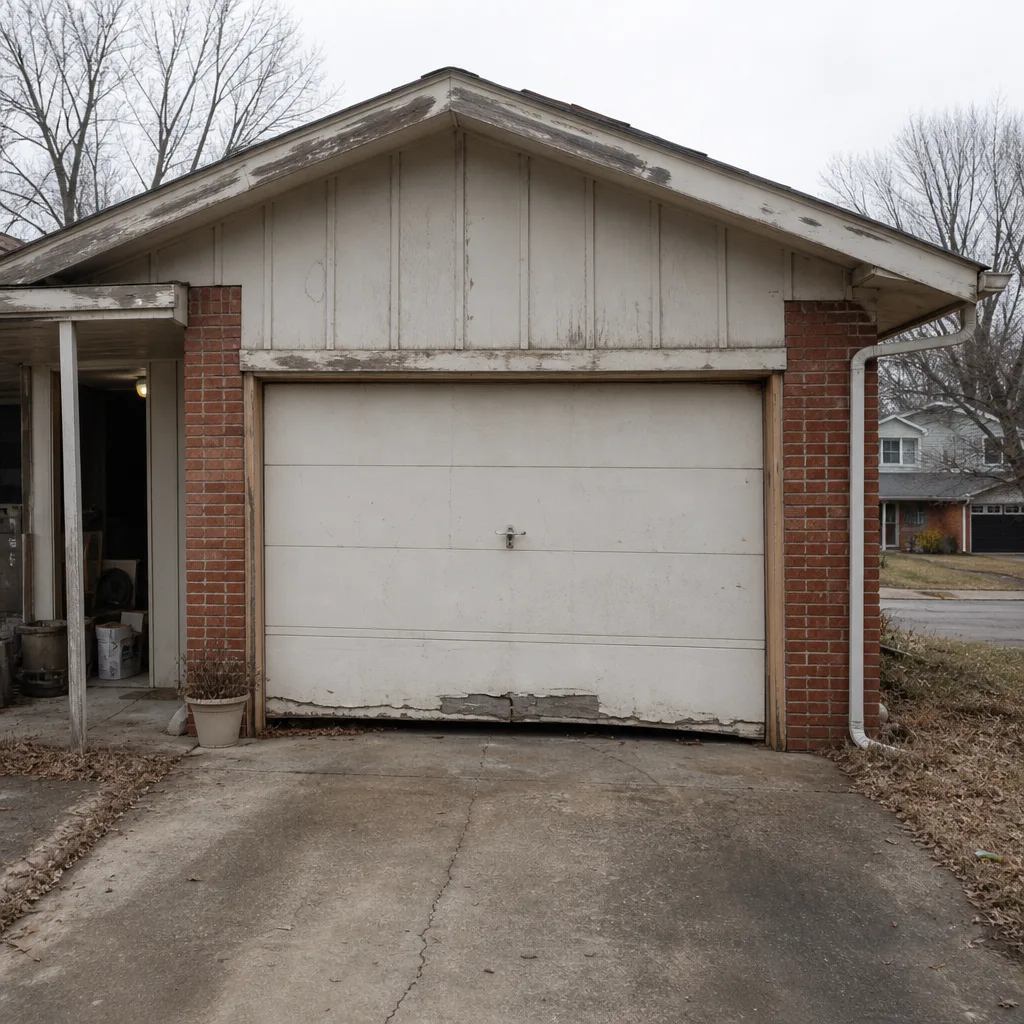 Before
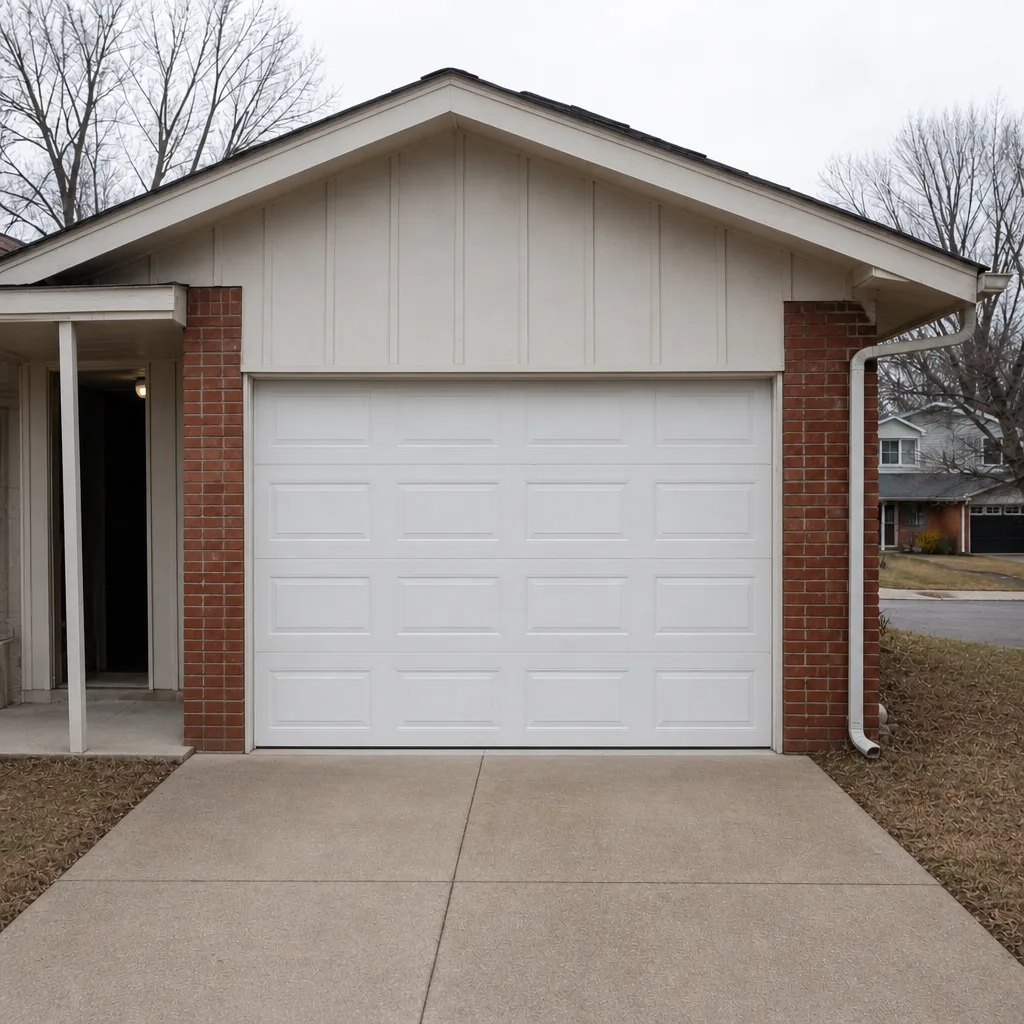 After
How Professional Garage Door Service Works in Oklahoma City
When you do call a specialist, knowing what to expect helps you evaluate whether you’re getting real expertise or a generalist guessing at your door. This is where garage door repair in Oklahoma City should follow a specific pattern.
Brand-Specific Diagnosis
A specialist who works on Clopay, LiftMaster, Genie, Amarr, and Chamberlain every day recognizes the model’s failure patterns. That knowledge means the difference between diagnosing a nuisance reversal as a sensor issue versus a logic board problem. It’s not that generalists are careless – it’s that a door specialist has seen your exact model fail in your exact way dozens of times. When we work on a LiftMaster opener, we’re working on a brand we service constantly. When we see a Chamberlain wall console, we already know its quirks. That depth is why the phrase “diagnosed correctly the first time” exists.
The Full-Lifecycle Advantage
One thing structural about garage door opener repair: the opener and the door are one system. A company that repairs openers but not doors, or installs doors but won’t touch openers, leaves the homeowner coordinating between two contractors who each blame the other’s component. Bellmont handles the entire lifecycle – repair, opener work, and new installation – so the diagnosis accounts for how the door and the drive system interact. When your door binds because the opener’s force limits were set for a lighter door, a door-only shop may not find it. A full-system shop does.
Common Mistakes to Avoid
- Using WD-40 on everything. It’s a solvent, not a lubricant. It strips the factory grease from rollers and springs, accelerating wear. Use silicone spray on door hardware and white lithium grease on the opener rail.
- Attempting to open a door with a snapped spring. The spring is the counterbalance. Without it, the door’s full weight lands on the opener or on you. If a spring is broken, call a professional before trying to move the door.
- Ignoring a cable that looks “a little frayed.” A frayed cable is a cable that’s about to fail. When it fails, the door’s weight loads unevenly, and secondary damage happens fast. Cables are always a pro-level replacement.
- Tightening track bolts without checking alignment. Bolts that need constant tightening are a sign the track has shifted. Tightening them in the wrong position locks in the misalignment and creates binding that’s harder to fix later.
- Applying self-adhesive weatherstripping in the middle of an Oklahoma City summer. The adhesive fails within days on a hot door face. Wait for mild weather or use mechanical fasteners.
- Thinking a storm-damaged door is fine because it still opens. The damage can be internal and cumulative. After severe wind, get the door inspected before trusting it over your car.
- Replacing a broken spring yourself because the online kit was cheap. The kit comes with bars that look like tools but aren’t the real winding bars a technician uses. The spring is still dangerous. This is the single most common correction call we get.
When to Call a Professional
Call a garage door specialist when the problem involves a snapped spring, a frayed or off-drum cable, a bent track, a door that won’t stay up, or an opener that doesn’t reverse on contact. Also call after any storm that moved the door or struck it with debris. These situations share one trait: the door’s stored energy or weight is no longer fully contained, and the next movement is the dangerous one.
Oklahoma City homeowners who need a garage door specialist can reach Bellmont Garage Door Repair at (833) 842-7854. We answer 24/7. Fast dispatch from 7am to 7pm, Sunday through Friday. Estimates are free, and the price is set in writing before any work starts.
Frequently Asked Questions
We don’t recommend it. Torsion springs store enough energy to cause serious injury when released, and the proper winding bars and techniques are the difference between a controlled repair and a dangerous accident. The cost of a spring replacement from a professional is far less than the risk of doing it yourself.
Weatherstripping replacement, lubrication, sensor realignment, and remote battery swaps are all safe DIY tasks. These jobs don’t involve tension or the door’s weight, and they’re straightforward for most homeowners.
Costs vary by the part and the brand, but the estimate should always be free and the final price should be in writing before work starts. Call (833) 842-7854 for a specific quote – we answer 24/7.
Don’t try to move or straighten anything. Even if the door opens, internal damage to springs, cables, or tracks may not be visible. Call for a professional inspection first, especially after the kind of severe weather Oklahoma City sees each spring.
Yes, spraying silicone lubricant on the spring is safe and helps extend its life. Do not touch the spring, and never use WD-40. The danger with springs comes from winding, unwinding, or replacing them, not from lubricating them.
Generally yes, openers from LiftMaster, Genie, and Chamberlain work with doors from Clopay, Amarr, and other brands. The key is proper force and travel limit settings matched to the door’s weight. A professional should set these any time a new opener is installed.
The Bottom Line
Safe DIY work on your Oklahoma City garage door is worth doing: it saves money, prevents bigger problems, and keeps you aware of your door’s condition. The danger line is clear and it doesn’t move: springs, cables, and structural track work are professional-only work because they hold stored energy that can hurt you. The smart Oklahoma City homeowner does the maintenance, leaves the dangerous stuff to a specialist, and recognizes that a free estimate costs nothing while a correction call costs more than the original repair would have. Call (833) 842-7854 when you hit the line. We answer 24/7, and we’ll tell you straight whether your job is something you can handle or something that needs us.
Written by the team at Bellmont Garage Door Repair, serving Oklahoma City since 2014.