
Last updated November 14, 2026
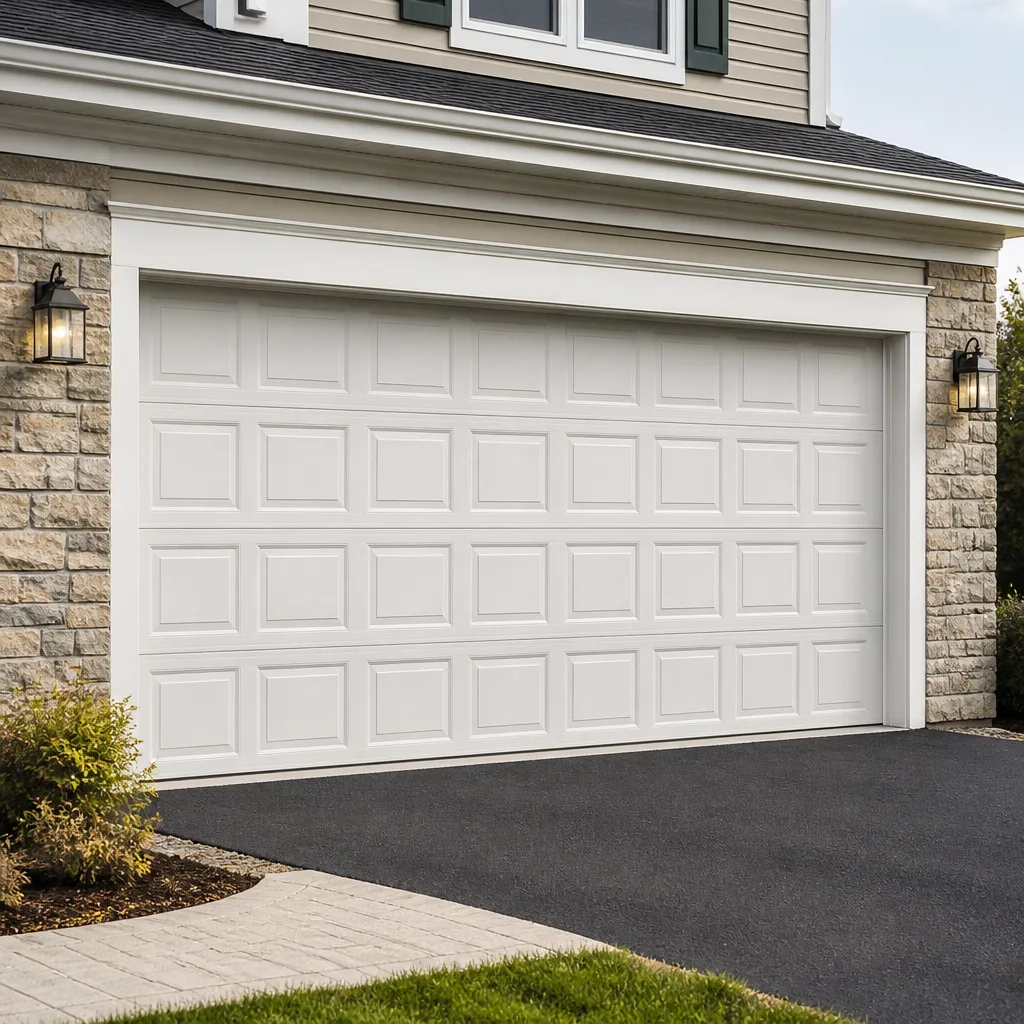 Raised-panel steel
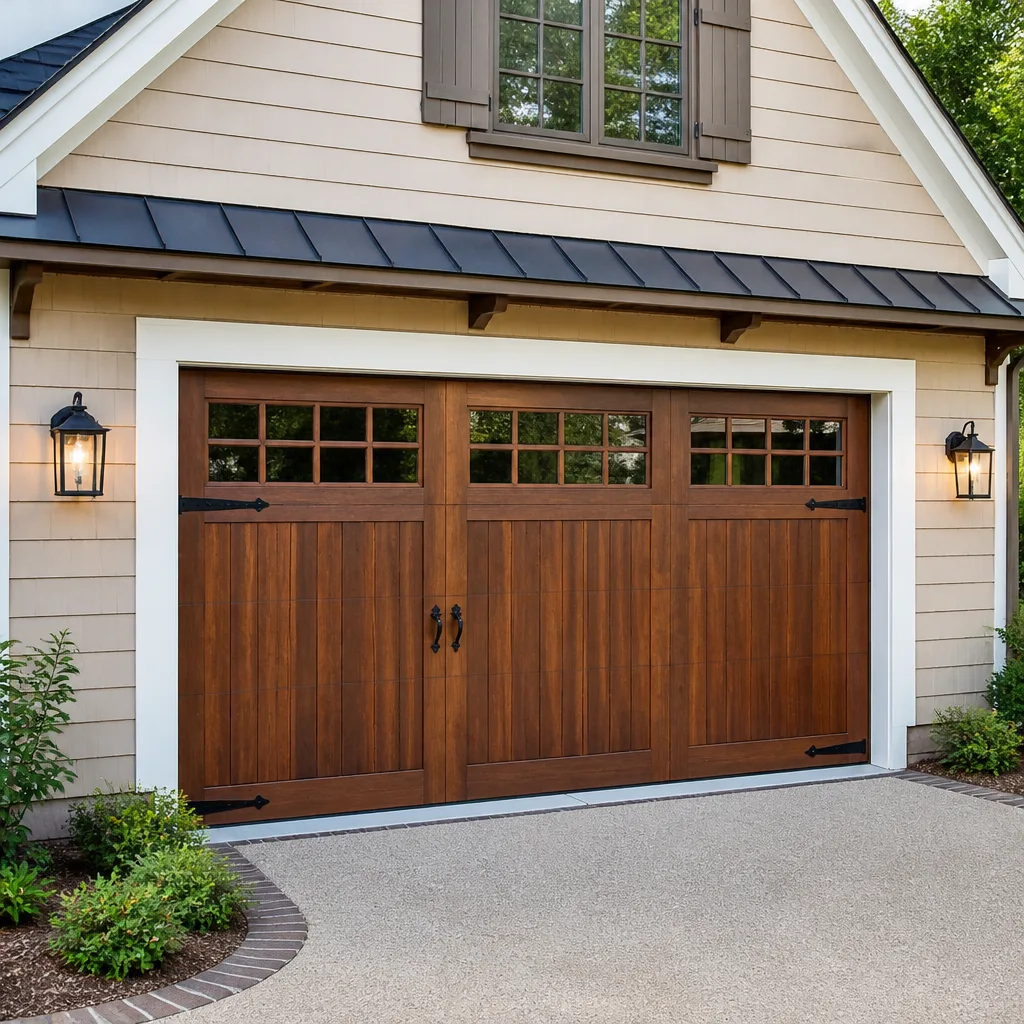 Carriage house
 Modern flush
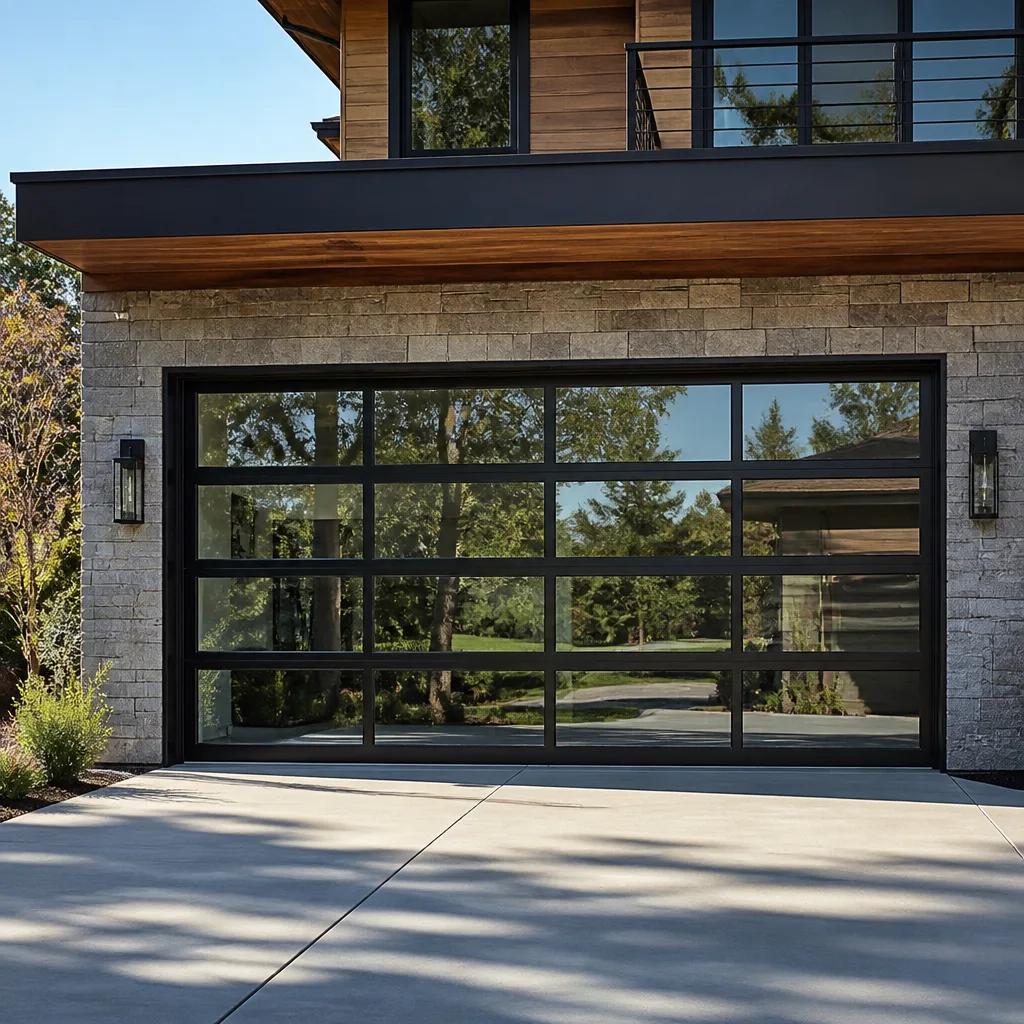 Full-view glass
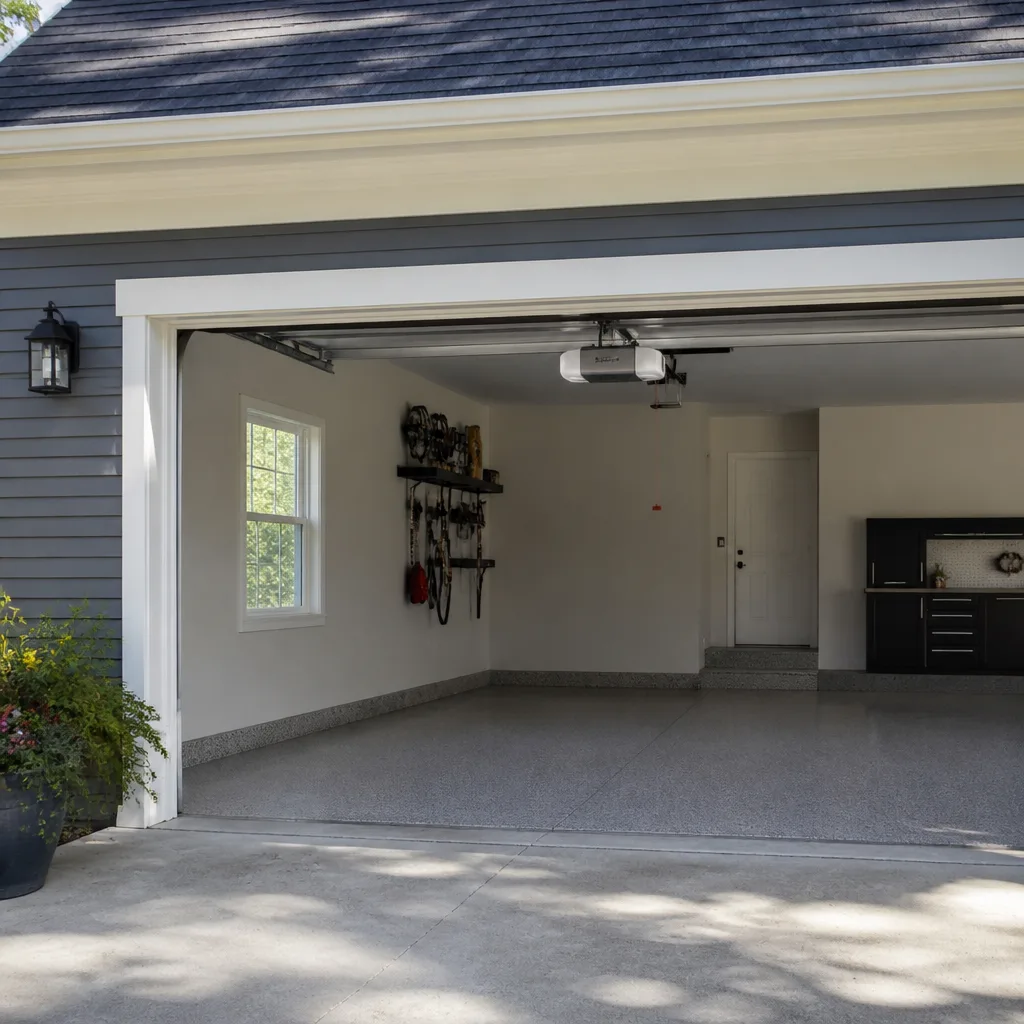 LiftMaster openers
 Chamberlain openers
Full 25-point door and opener safety check with every visit - springs, cables, rollers, tracks, and your LiftMaster or Chamberlain opener included
You get a price before we start. It does not change when the truck arrives.
Get your free estimateGarage Door Emergency Preparedness Guide for Oklahoma City Homes
Most Oklahoma City homeowners think about tornado prep in terms of storm shelters, bottled water, and weather radios. The garage door rarely enters the conversation. That’s a serious blind spot. During the 2013 Moore tornado, garage doors were among the first structural elements to fail, and once a garage door fails under wind pressure, the structural load on the rest of the house changes immediately. This guide walks through what actually matters: whether your current door can handle Oklahoma wind, how to prepare it before storm season, what to do when the power goes out, and how to inspect it after the sirens stop. We’re writing this as an Oklahoma City garage door company that has seen what high winds do to residential doors, and we’d rather you prepare now than call us in a panic later.
Styles & brands we work with
- Raised-panel steel
- Carriage house
- Modern flush
- Full-view glass
- LiftMaster openers
- Chamberlain openers
Quick Answer
Garage door emergency preparedness in Oklahoma City means three things: confirming your door and its reinforcement meet current wind-load recommendations for Oklahoma’s tornado-prone zone, practicing the manual release before you need it, and having a plan for power outages that includes a tested battery backup or a clear manual procedure. Most standard doors installed before 2014 are not reinforced for the wind pressures that Oklahoma storms generate, and the single most important preparation step is a professional assessment of your current door’s structural integrity. The manual release cord is your door’s emergency override, and every adult in the home should know where it is and how to use it.
Table of Contents
- What Wind Load Means for an Oklahoma City Garage Door
- The Manual Release Procedure Every Home Should Practice
- Power Outage Protocols: Battery Backup and What Actually Happens
- Post-Storm Inspection: What to Check Before You Touch That Button
- Reinforcing an Existing Door Without Full Replacement
- Smart Openers and Storm Season: What Connected Systems Can and Cannot Do
- Common Mistakes to Avoid
- When to Call a Professional
- Frequently Asked Questions
- The Bottom Line
What Wind Load Means for an Oklahoma City Garage Door
Wind load is the amount of force wind exerts on a vertical surface, and your garage door is the largest vertical surface on the front of most homes. In Oklahoma City, we sit inside a tornado-prone corridor where design wind speeds are higher than what most standard garage doors are built to handle. A door that meets basic residential standards in, say, Ohio, may be significantly under-specified for what we see in central Oklahoma.
The difference between a wind-rated door and a standard door comes down to structural reinforcement. A wind-rated door typically features heavier gauge steel or aluminum, additional horizontal struts across each panel, and heavier hinges and rollers that connect those panels to the track. The track itself is usually anchored with more fasteners and into more substantial framing. A standard door has none of these upgrades. It keeps weather out and looks fine on a calm day. Under the kind of pressure differential that a passing tornado or severe straight-line wind event creates, a standard door flexes, pops out of its track, or tears free entirely.
Here is what you should assess on your current door:
- Panel gauge. Heavier gauge steel resists flexing under load. If you can press on a section of the panel and see visible flex with moderate hand pressure, it is likely a lighter gauge not intended for high-wind zones.
- Strut reinforcement. Look at the interior of each panel where the door is closed. Horizontal metal struts, usually U-shaped channels bolted or screwed across the full width of the section, add stiffness. If your door has none, it relies entirely on the panel metal itself.
- Hinge and roller size. Heavier hinges with more fasteners into the panel, and larger diameter rollers, keep the door seated in the track during lateral movement.
- Track anchoring. The vertical and horizontal track sections should be attached to the wall and ceiling framing with lag bolts or structural screws at regular intervals. Fastener spacing wider than 18 to 24 inches, or fasteners that go only into drywall, are a red flag.
We service Clopay, Amarr, Wayne Dalton, and Raynor doors, and each of these manufacturers builds both standard and wind-rated product lines. The wind-rated versions from any of them are visibly different when you look at the interior: struts are present, hinges are heavier, and the overall feel when opening and closing is more deliberate. If your door is older, it is worth knowing whether it was originally specified for this region. A door installed in Oklahoma City in the 1990s or early 2000s, before wind-load awareness became widespread in local building practice, is likely a standard residential door.
Ask your city’s building department about current wind-load requirements for garage doors in your specific area. Requirements can vary by exposure category, which depends on surrounding terrain and building height. Do not assume that because your neighbor’s door looks the same, both doors are comparably reinforced.
The Manual Release Procedure Every Home Should Practice
The manual release is the red cord hanging from the opener rail near the motor. Pulling it disconnects the door from the opener carriage, allowing the door to be moved by hand. In a power outage or after an opener failure, this is how you get your car in or out, and how you close and secure the garage if a storm is approaching and the opener is dead.
The problem is that most people only try the manual release for the first time when they need it, which is the worst possible moment to learn. In a dark garage during a storm, with adrenaline up, the mechanics are not obvious. We recommend practicing this procedure twice a year, once before spring storm season and once before winter, so it becomes muscle memory.
Here is the standard procedure:
- Confirm the door is fully closed. Releasing a door that is partially open can cause it to slam down, which is dangerous and can damage the door.
- Locate the release cord. It hangs from the opener rail, typically within arm’s reach or with a short step stool. In some Oklahoma City garages with high ceilings, the cord may be extended with an added length; make sure yours can be reached without climbing on anything unstable.
- Pull straight down firmly. You should hear a distinct click as the carriage disengages from the chain or belt.
- Lift or lower the door by hand. Use the handles or the bottom edge, keeping your fingers clear of the section joints. A properly balanced door should move with moderate effort. If it is very heavy or falls quickly, the springs are failing or broken, and the door should be left alone until a technician can address it.
- To re-engage, pull the cord again toward the door while pressing the opener button. The carriage will reconnect on the next cycle.
If the release cord is inaccessible because of ceiling height, because storage has blocked the area, or because the cord itself is broken, do not try to improvise with a ladder during a storm. That is a situation to resolve ahead of time. We can extend the cord or replace the release mechanism so it works reliably when you need it.
A note on safety: the manual release works with the opener, but the door’s weight is counterbalanced by the torsion springs above the door. Those springs are under high tension. Never attempt to adjust, replace, or inspect them yourself. If the door is hard to lift manually, or drops unexpectedly, that indicates a spring problem. Close the door if you safely can, leave it, and call us.
For doors in Oklahoma City, we recommend practicing the full release and manual lift at least once, then operating the door normally to confirm the opener re-engages. A release that works but then fails to re-engage cleanly is almost as bad as no release at all.
Power Outage Protocols: Battery Backup and What Actually Happens
Power outages in Oklahoma City happen for two main reasons: severe weather and ice storms. Both can leave your garage door inoperable at exactly the moment you want to get a vehicle out, or get it secured. The question is whether your opener has a battery backup, and whether that battery actually works.
Battery backup openers function as simple DC-powered units that store enough charge to cycle the door a limited number of times when household power is out. The two dominant smart platforms we work on, LiftMaster and Chamberlain, both offer opener models with integrated battery backup, and Genie offers comparable setups on select models. The battery is typically a sealed lead-acid pack that sits inside the opener housing or in a small adjacent box.
Here is the reality of battery backup performance:
- Capacity is limited. Most backup batteries will cycle a standard residential door somewhere between 20 and 50 times depending on door weight, balance, and battery age. This is plenty for getting cars out and securing the home, but it is not unlimited power.
- Batteries age even when unused. A battery that has not been cycled in over a year may have lost significant capacity. If your opener has a backup battery and you have never tested it, test it now: unplug the opener from the wall outlet and operate the door once or twice. If the door moves slowly or the opener beeps and refuses, the battery needs replacement.
- Smart features do not all work in backup mode. MyQ connectivity, camera feeds, and other networked functions generally do not operate when running on battery. The door opens and closes. That is the extent of it.
If your opener has no battery backup, the procedure is the manual release described above. Pull the cord, operate the door by hand, and leave it disconnected until power returns. When power comes back, re-engage the carriage and run a full open-close cycle to confirm everything is seated correctly.
One thing we advise against: using a generator to power a garage door opener unless you have an electrician-confirmed transfer setup. Openers are sensitive to power quality, and improper generator hookups can damage the control board. Your manual release works every time and costs nothing to operate.
Post-Storm Inspection: What to Check Before You Touch That Button
After high winds, hail, or a tornado warning in your area of Oklahoma City, the instinct is to open the garage and check on things. Do not do that yet. If the door was damaged, operating it can turn a repairable issue into a full replacement, and a door that is partially out of its track can fall or shift dangerously when activated.
Before operating the door, do this visual inspection from inside the garage, with the door closed:
- Look at the vertical track on both sides. Check for gaps between the track and the wall, bent sections, or fasteners that have pulled loose. If the track has shifted, do not operate the door.
- Inspect the section edges. Hail can dent panels, but high winds can bend the top section, particularly where the opener arm attaches. Look for visible deformation, especially at the top panel and the bottom corners.
- Check the opener arm and carriage. The straight or curved arm connecting the opener to the door should be straight and firmly attached at both ends. If it is bent or the bracket screws are pulling out of the door, leave it alone.
- Look at the springs. Torsion springs above the closed door should be intact. If you see a visible gap in the spring coil, or one spring hanging loose, the spring is broken. Do not operate the door and do not attempt any repair yourself. Broken torsion springs have caused serious injuries when homeowners try to work on them.
- Scan the floor and bottom seal. Hail and wind-driven debris can damage the bottom seal or embed debris in the track. Clear any loose material that is safely reachable.
Only if all of these checks pass should you run the opener. Watch and listen through a full open-close cycle: unusual grinding, hesitation, or jerking means something shifted internally. Stop and call us.
If the door will not open, or you see track damage, section damage, or a broken spring, leave the door alone and call garage door repair. A partially failed door under spring tension is not something to diagnose by trial and error.
Reinforcing an Existing Door Without Full Replacement
Full wind-rated replacement is the most complete solution, but it is not the only option. For many Oklahoma City homes, reinforcing an existing sound door makes structural and financial sense, provided the existing door is in good condition and the panels are not corroded, cracked, or otherwise compromised.
The two most effective reinforcement measures we recommend are bolt-down anchors and horizontal bracing struts.
Bolt-down anchors secure the bottom of the door track to the concrete slab or foundation with expanding bolts, rather than the small screws many installers use. Under lateral wind pressure, the bottom of the track is a primary failure point. Anchor bolts resist the track pulling away from the floor, which keeps the rollers seated and the door in its track.
Horizontal bracing struts bolt across the interior of each door panel, adding stiffness that resists flex. Struts are the single most visible difference between a standard door and a factory wind-rated door, and they can be retrofitted to most sectional doors from Clopay, Amarr, Wayne Dalton, and Raynor. A properly strutted door distributes wind pressure across the track system instead of bowing the panel out of its channel.
What we do not recommend: adhesive foam or spray-applied “reinforcement” products marketed online. These add minimal bending stiffness at the thicknesses involved and can trap moisture against steel panels, accelerating corrosion. Similarly, generic cross-bracing kits sold as universal fit often attach to the panel with undersized screws that pull out under real load. The bracing has to transfer load to the hinges and track, not just sit on the panel face.
The honest assessment is that retrofitting helps, but it has limits. A heavily worn door with loose hinges and tired rollers surrounded by a flimsy track is not going to be transformed by adding struts. The door’s existing structural condition matters as much as the reinforcement itself. If you are considering bracing, start with an assessment of what is actually there now. In our experience working on doors across Oklahoma City, the condition of the track anchoring and the hinge fasteners is often the real weak point, not the panel itself.
Smart Openers and Storm Season: What Connected Systems Can and Cannot Do
More Oklahoma City garages now have smart openers than ever before, most running on LiftMaster or Chamberlain hardware with the MyQ platform. These systems are genuinely useful year-round. They are not an emergency preparedness tool, and understanding the distinction matters.
A smart opener lets you check whether the door is closed from your phone, and close it remotely if you forgot. That is useful when a storm warning hits and you are halfway across town. What it cannot do is operate the door when household power is out unless the specific opener model has a battery backup installed, and even then, the app functions are typically unavailable. The backup system moves the door. The smart features require the full opener system to be powered.
There is also a practical limitation during severe weather: if your home’s internet connection goes down, which often happens in the same storm that knocks out power, your remote access is gone regardless of opener capabilities. Your preparedness plan should always assume you will be operating the door manually or via a local push-button inside the garage.
One additional consideration: when MyQ and similar systems are connected to your home network, they can alert you when the door opens. That is helpful for security. During storm season, an alert that the door was just opened by wind pressure, rather than by a person, is a signal to inspect the door immediately. A door that has been blown partially out of its track may read as “open” on your app even though the opener did not run. Check visually before assuming the opener is malfunctioning.
We work on the full range of connected and legacy openers, from current LiftMaster and Chamberlain MyQ systems to older Craftsman and Genie units. The emergency fundamentals do not change based on how smart the opener is: know where the release cord is, know whether your backup battery works, and know how to check the door after a storm.
Common Mistakes to Avoid
- Never testing the manual release until the power is already out. The release cord is a mechanical device that can be stiff, broken, or out of reach. Finding that out during a storm wastes time and creates risk. Test it twice a year.
- Assuming a metal garage door is automatically wind-rated. Steel gauge and panel reinforcement matter more than the fact that the door is metal. Many Oklahoma City homes have lightweight steel doors that flex easily under load.
- Reinforcing the panel while ignoring the track anchoring. A strong panel attached to a loosely anchored track fails at the track, not the panel. Both sides of the system, the door and the mounting, need to be addressed.
- Operating the door immediately after a storm without a visual check. A door with wind damage can fall or jam when activated. The two minutes spent looking at the track, panels, and springs before pressing the button can prevent a much more expensive repair.
- Attempting spring work or release-cord troubleshooting under pressure. Torsion springs are loaded with enough tension to cause severe injury. This is not a task to attempt during an emergency. The release cord is the safe, designed override.
- Relying on a smart opener app as an emergency plan. When the power and internet are out, the app cannot help you. Your local manual procedures are the plan. The app is a convenience, not a backup system.
- Ignoring the garage in tornado prep altogether. The garage door is a structural weak point that affects the whole house once it fails. Preparing it is as much about protecting the home as it is about protecting the cars inside.
When to Call a Professional
Some preparedness tasks are homeowner-level: testing the release cord, checking the backup battery, clearing debris from the track after a storm. Others are not. If your door shows signs of wind damage, structural fatigue, or spring failure, that is a professional situation. So is any reinforcement work: installing bracing struts and bolt-down anchors correctly requires matching the parts to the specific door model and mounting them so the load transfers correctly. A vehicle parked in the garage is worth protecting, and so is the structural role the garage plays for the entire Oklahoma City home.
Bellmont Garage Door Repair offers free estimates in Oklahoma City. We work on the door systems most Oklahoma City homes already have, including Clopay, Amarr, Wayne Dalton, and Raynor panels, and LiftMaster, Chamberlain, Genie, and Craftsman openers. Garage doors are all we do, so when we assess your door for storm readiness, we are looking at the entire system, not just one component. Call (833) 842-7854 and we will schedule a time to look at your door, answer the wind-load questions specific to your home, and give you a written estimate before any work starts.
Frequently Asked Questions
Start by looking for horizontal struts across the interior of each panel, heavier hinges, and properly anchored track with structural fasteners into framing and concrete. If those are present, the door was likely specified for a higher-wind environment. If not, the door is probably a standard residential unit. Contact your city’s building department for the specific wind-load requirement that applies to your exposure category, and have a garage door professional assess what you currently have.
The manual release cord disconnects the door from the opener carriage so the door can be moved by hand. It is the designed override for power outages and opener failures. Pulling it while the door is closed, then lifting manually, is the correct procedure. Practice it before storm season so it is familiar when you need it.
Most battery backup systems will cycle a standard residential door 20 to 50 times depending on door weight, balance, and battery condition. A battery that is more than a year old and has not been tested may have significantly reduced capacity. Test it by unplugging the opener and running the door: if it moves slowly or refuses to operate, replace the battery.
Before operating the door, visually inspect the vertical track on both sides for gaps or bends, check the panels for deformation, look at the opener arm for straightness, and confirm the torsion springs are intact. If anything is bent, loose, or broken, leave the door alone and call a professional. Only operate the door if the full visual check passes.
Yes, in many cases. Bolt-down anchors that secure the track to the concrete and horizontal bracing struts bolted across each panel are the two reinforcements that meaningfully improve wind resistance. The existing door needs to be in sound structural condition for retrofitting to work. Sprays and adhesive products marketed for reinforcement are not a substitute for mechanical bracing.
We work on the door systems most Oklahoma City homes already have. On the panel side that includes Clopay, Amarr, Wayne Dalton, and Raynor. On the drive side it includes LiftMaster, Chamberlain, Genie, and Craftsman, including MyQ connected openers. If your system is from one of those brands, we can assess it, repair it, or replace it. Call (833) 842-7854 for a free estimate.
The Bottom Line
Garage door preparedness in Oklahoma City is not about buying the most expensive wind-rated door available. It is about knowing what your current door can and cannot handle, testing the emergency systems that already exist, and having a clear procedure for before, during, and after severe weather. Practice the manual release. Test the backup battery. Inspect the track anchoring and panel reinforcement. After any significant wind event, check the door visually before running the opener. If you do all of that, you have materially reduced the risk of the garage becoming a structural failure point in the next storm. The rest is details, and when you want a professional opinion, we are here. Call (833) 842-7854 for a free estimate, and remember garage door opener repair is also part of what we do.
Written by the team at Bellmont Garage Door Repair, serving Oklahoma City since 2014.
See the difference
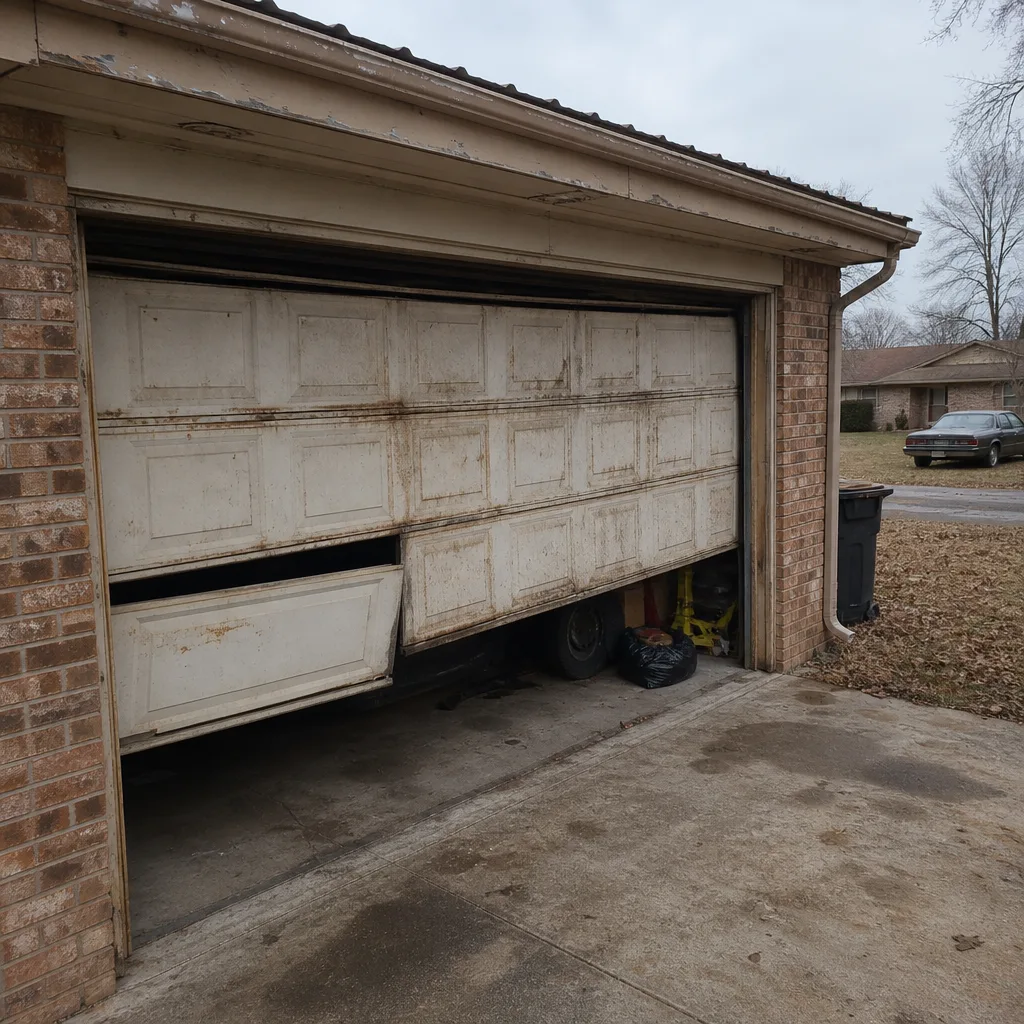 Before
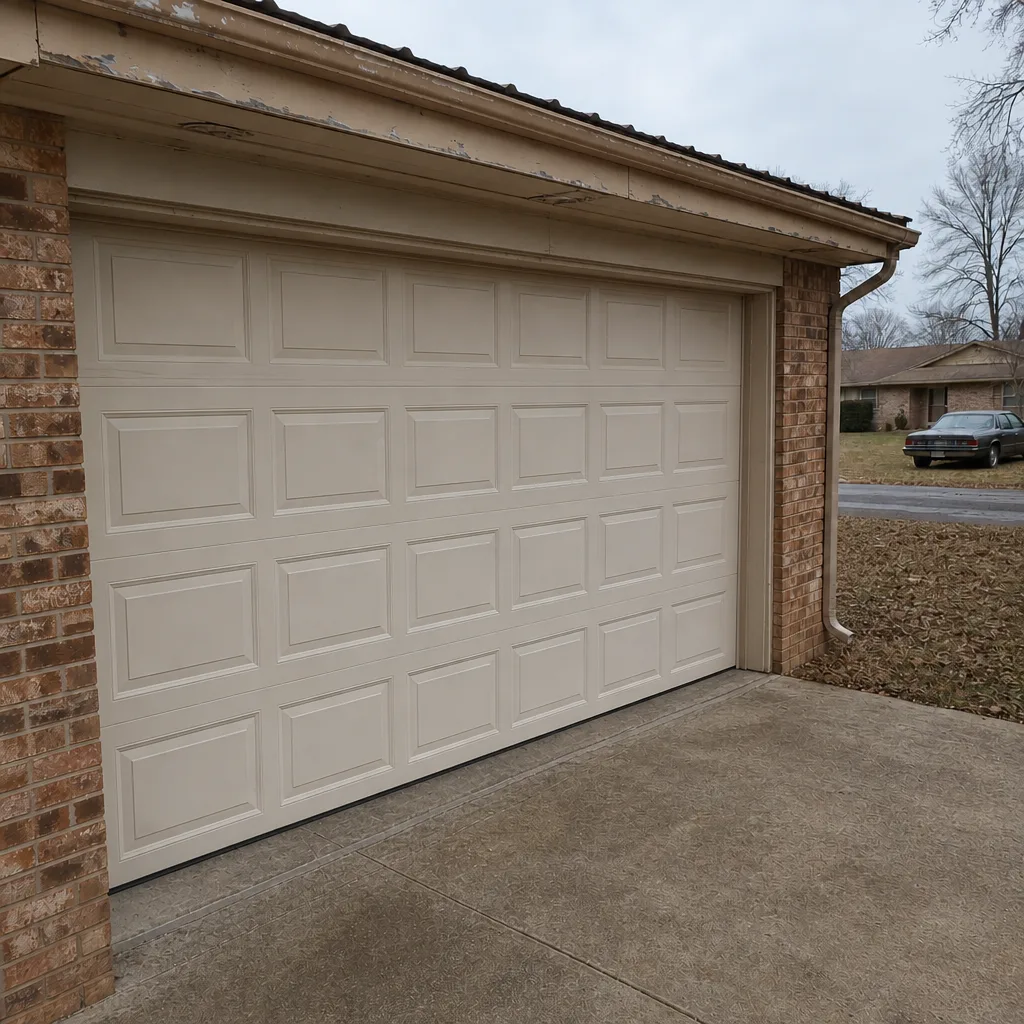 After
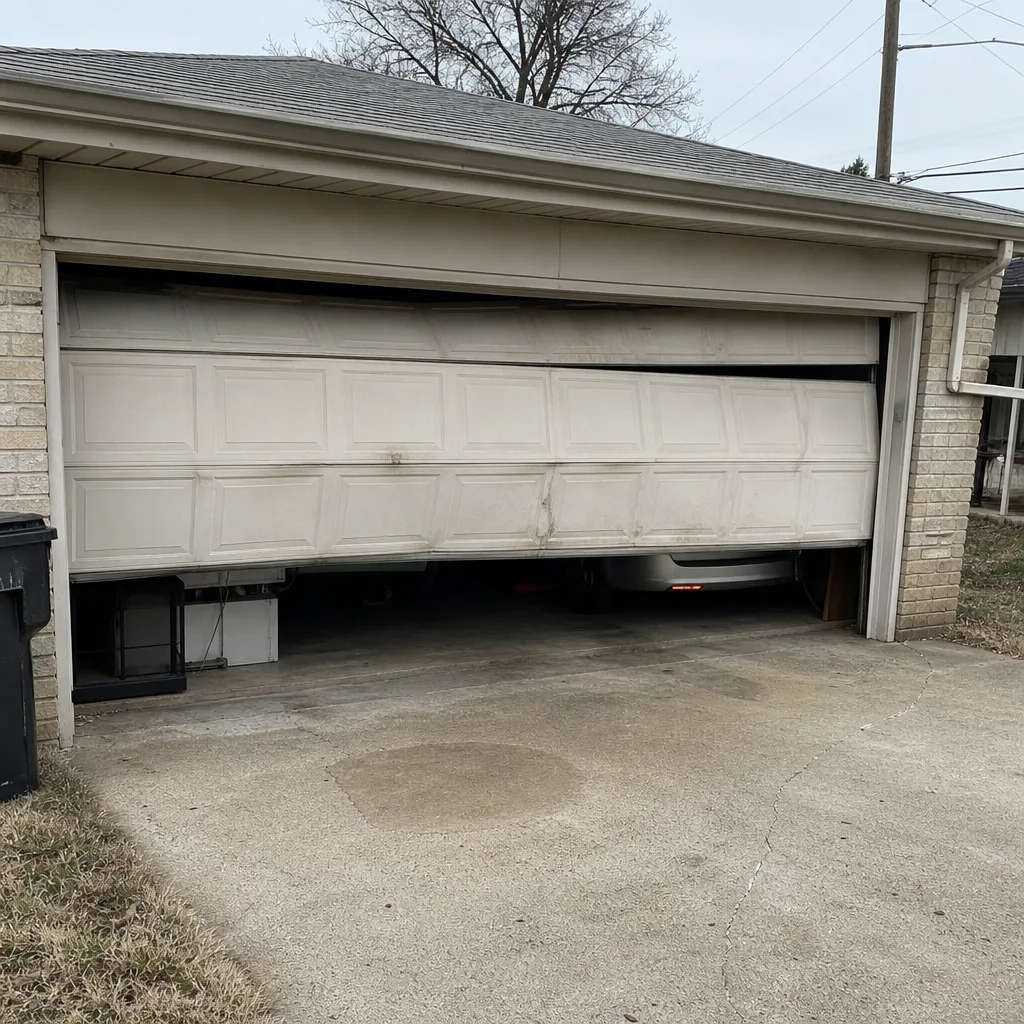 Before
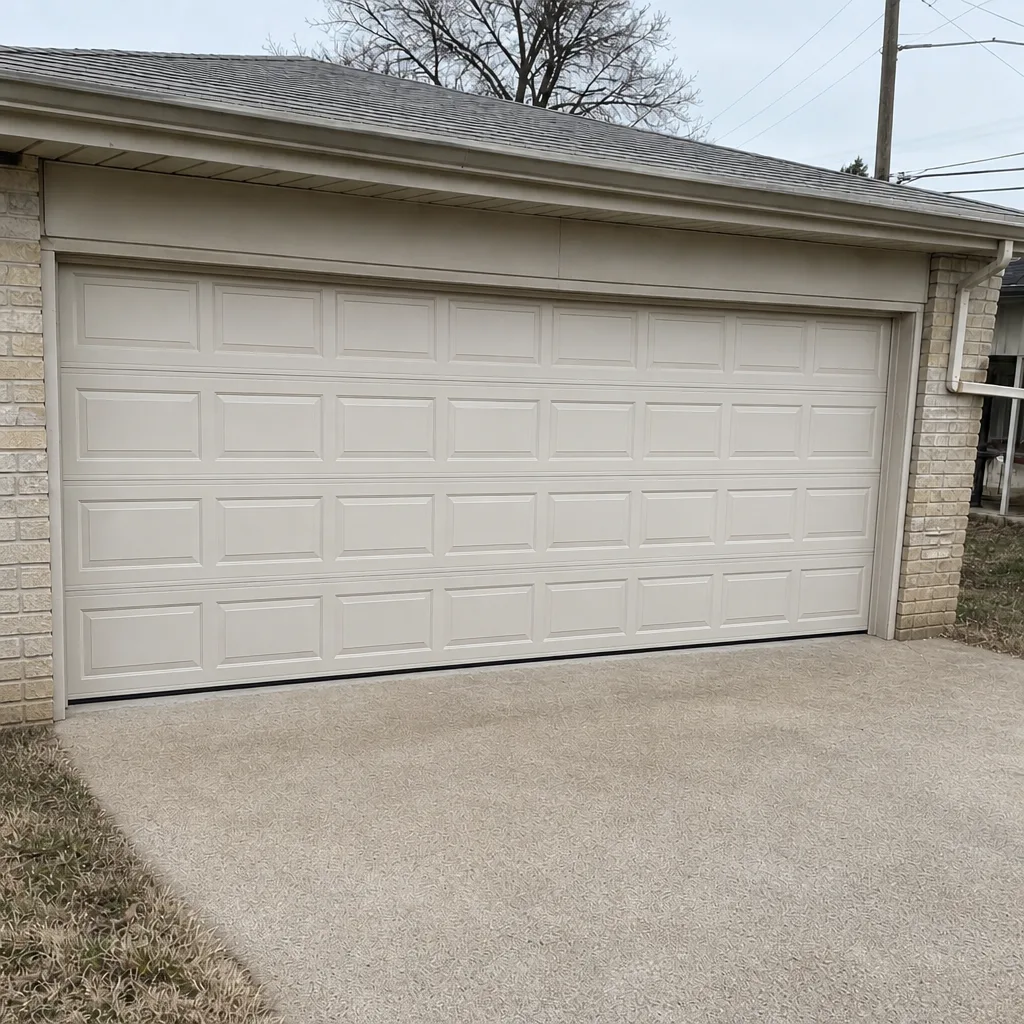 After
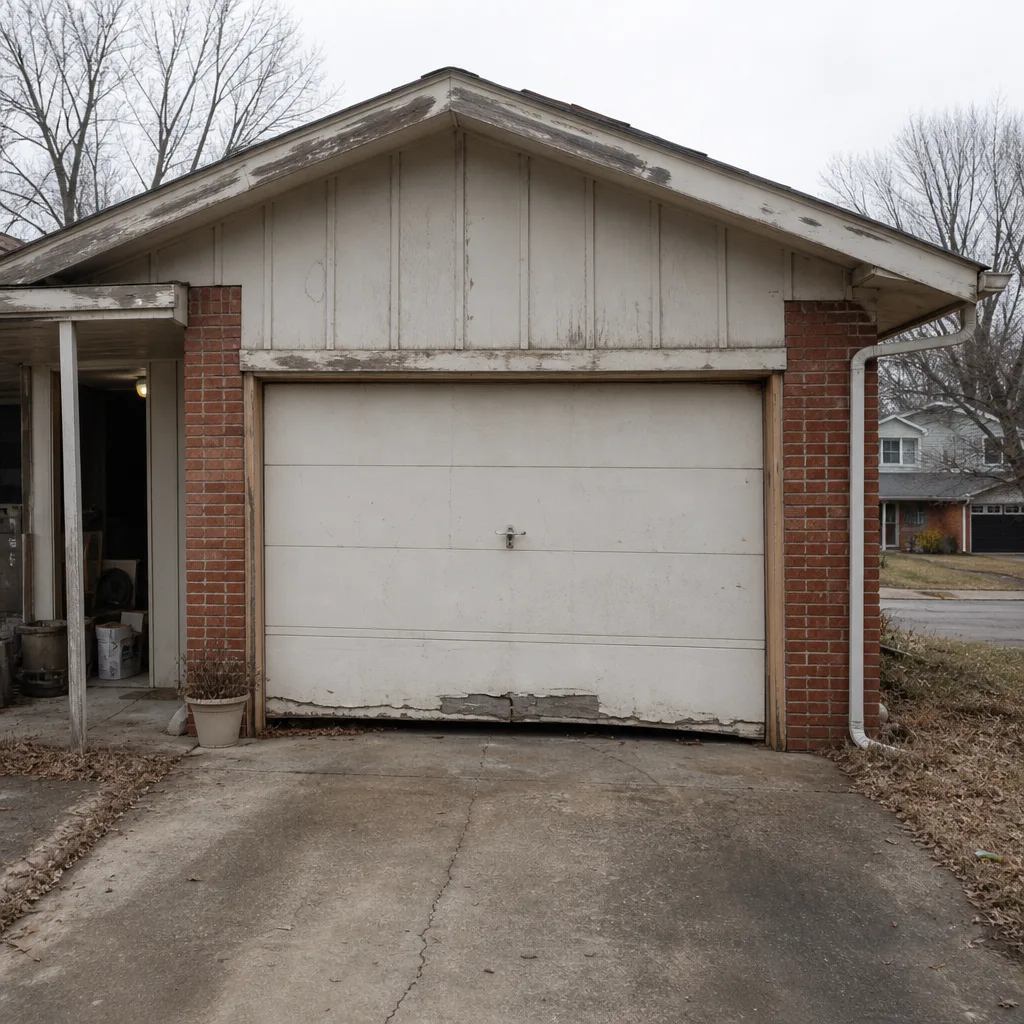 Before
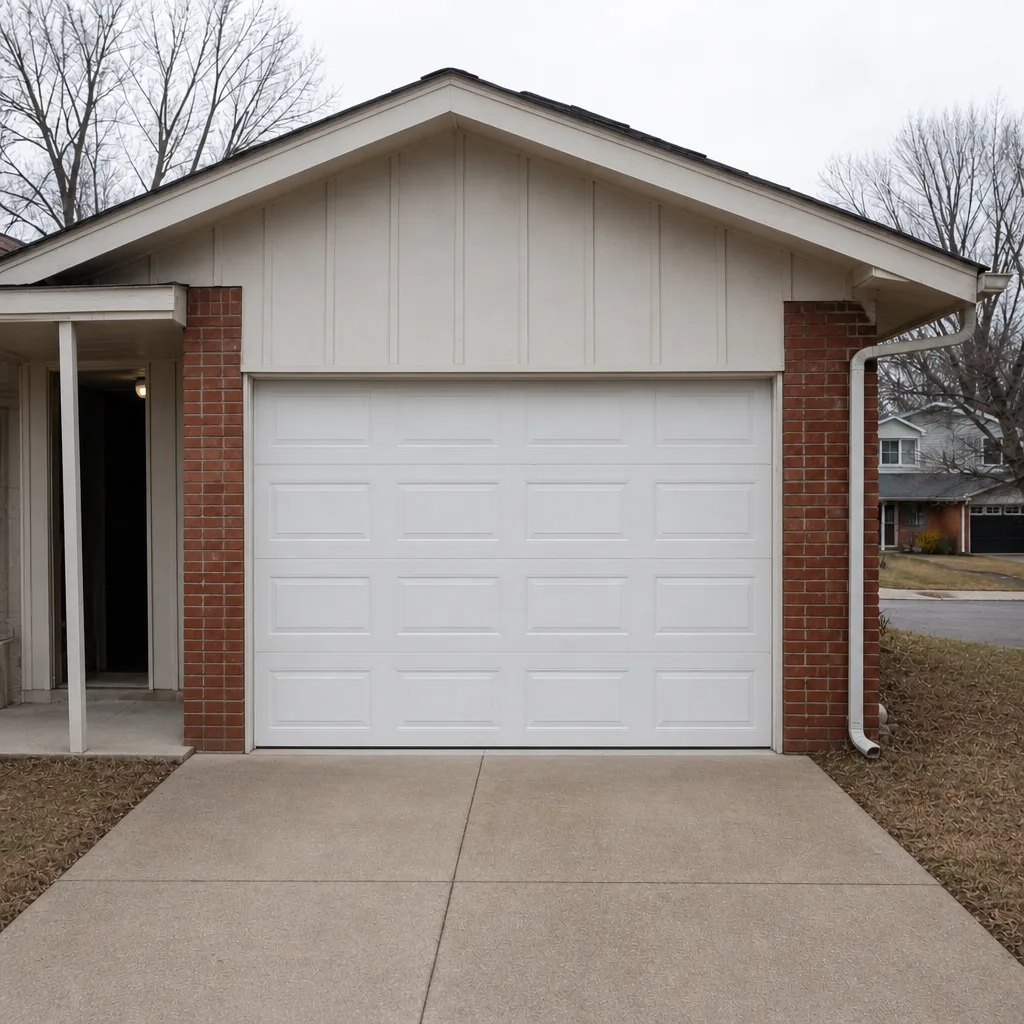 After