
Last updated November 14, 2026
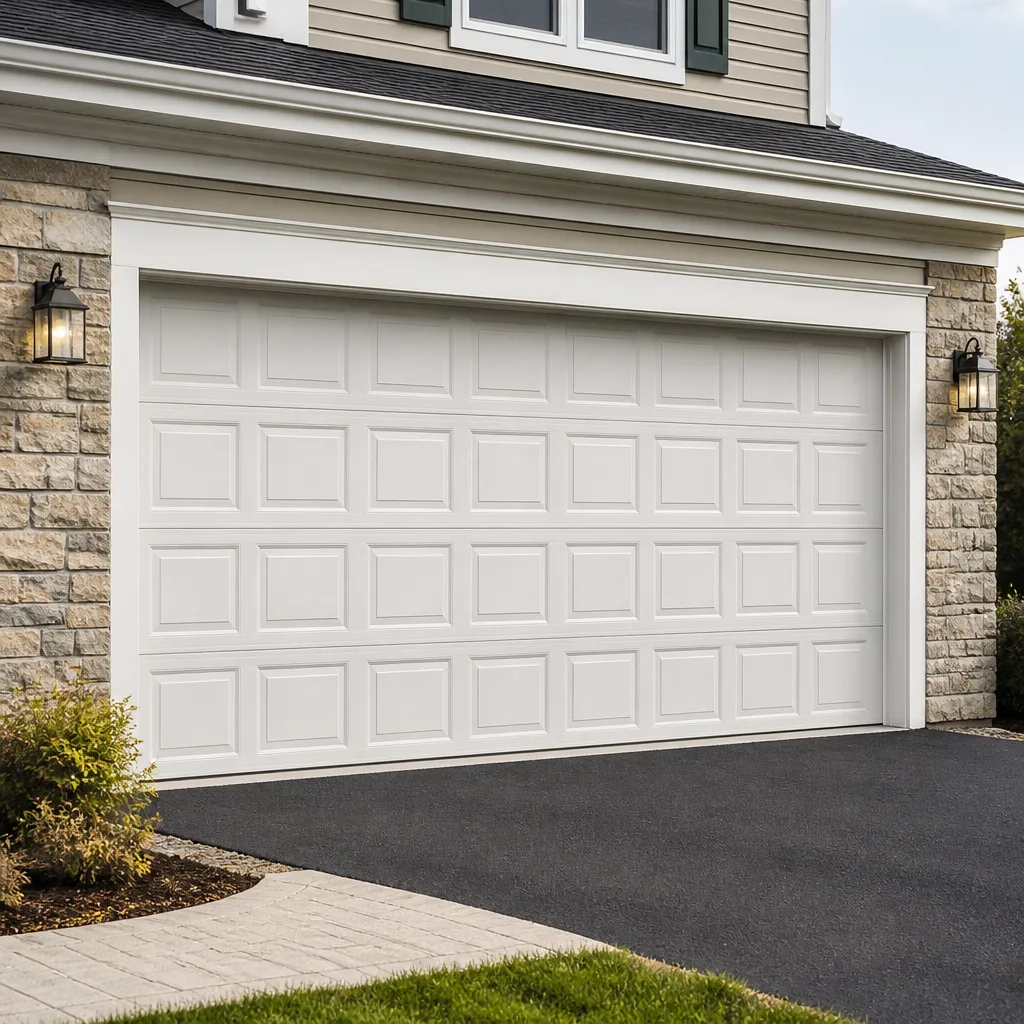 Raised-panel steel
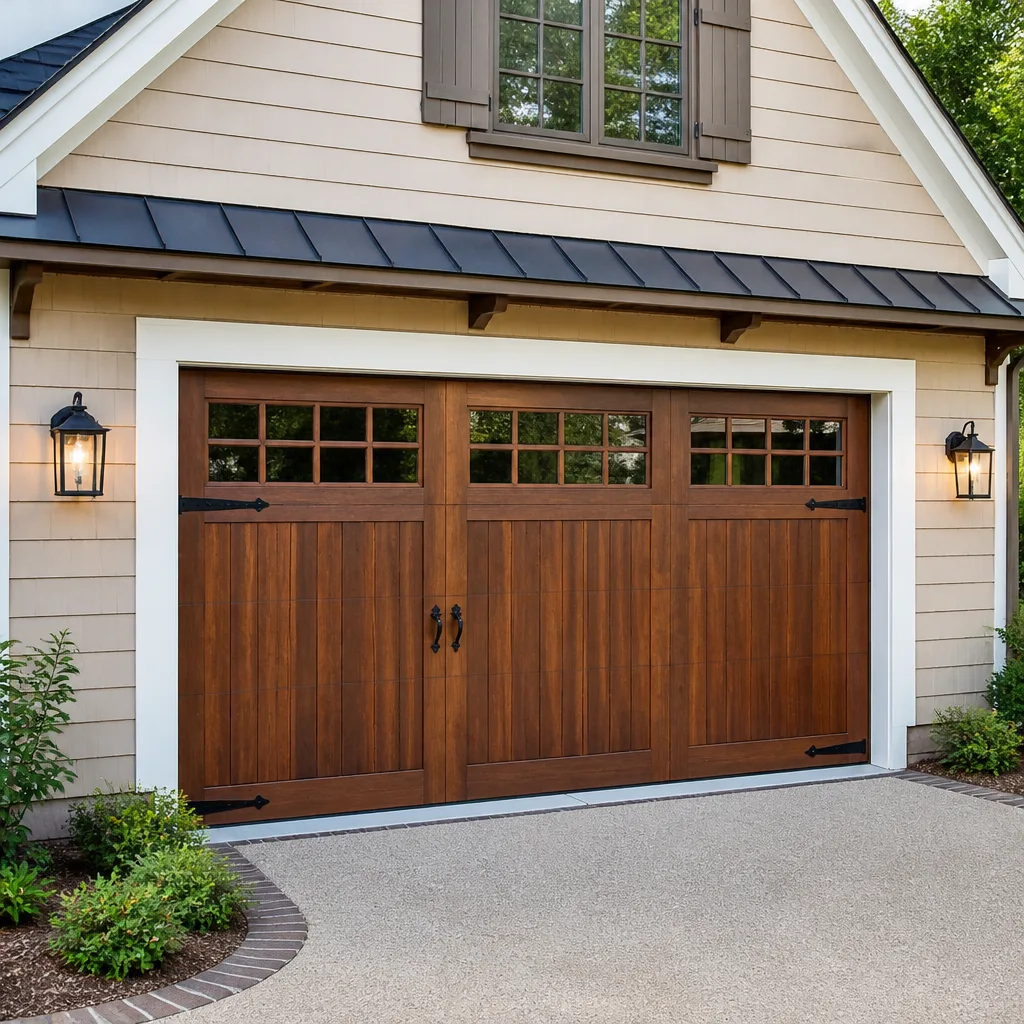 Carriage house
 Modern flush
 Full-view glass
 LiftMaster openers
 Chamberlain openers
Full 25-point door and opener safety check with every visit - springs, cables, rollers, tracks, and your LiftMaster or Chamberlain opener included
You get a price before we start. It does not change when the truck arrives.
Get your free estimateGarage Door Repair Maintenance Checklist for Oklahoma City Homeowners
Most Oklahoma City homeowners only think about their garage door when it stops working. By then, the repair was usually months in the making. The number-one call we get after Oklahoma’s first cold snap is a door that worked fine in September. The problem actually started in July, when heat and dust began wearing down components nobody ever checked. This guide gives you a season-by-season maintenance routine built for Oklahoma City’s climate: brutal summer heat, red clay dust, and hard winter freezes. You’ll learn what to check, what to skip, and what measurements to give a technician so a repair gets diagnosed correctly the first time.
Quick Answer
The best garage door maintenance checklist for Oklahoma City homeowners follows the weather, not the calendar. Lubricate rollers, hinges, and springs twice a year using a synthetic or silicone-based product that survives Oklahoma summer heat. Test spring tension monthly by disconnecting the opener and lifting the door manually. Keep the tracks clean of red clay dust, especially after windy spring weeks. Log how the door sounds and moves so intermittent problems get caught before they become breakdowns. Most tasks take under 15 minutes and can prevent the majority of repair calls we see across Oklahoma City.
Styles & brands we work with
- Raised-panel steel
- Carriage house
- Modern flush
- Full-view glass
- LiftMaster openers
- Chamberlain openers
Table of Contents
- The Oklahoma City Seasonal Maintenance Calendar
- How to Test Spring Tension Safely at Home
- Why Oklahoma City Dust Accelerates Roller and Hinge Wear
- Lubrication Products That Survive Oklahoma Summer Heat
- How to Log Door Behavior for Faster Diagnosis
- The Monthly 15-Minute Walkthrough
- Garage Door Opener Maintenance Specifics
- Weather Seals and Oklahoma City’s Freeze-Thaw Cycle
The Oklahoma City Seasonal Maintenance Calendar
Generic checklists say “inspect in spring and fall.” Oklahoma City weather doesn’t cooperate with that. Our springs are windy and dusty. Summers push temperatures above 100°F for weeks. Fall brings sudden temperature drops. Winter alternates between hard freezes and mild thaws. Each season stresses different components, so each season gets different tasks.
- March through May (wind and dust season): Clean the tracks and rollers every two weeks. Oklahoma’s wind picks up red clay dust and fine grit that coats everything. Pay attention to the bottom weather seal, where dust accumulates and grinds against the concrete.
- June through August (extreme heat): Check lubrication monthly. Heat thins petroleum-based lubricants until they drip off. Inspect rubber weather seals for cracking. Test the opener’s force settings by placing a 2×4 flat under the door. It should reverse within a second of contact.
- September through November (temperature swings): Test spring tension. The first cold snap is when weak springs snap. Listen for creaking that wasn’t there in August. Check that the door stays balanced at the halfway point when opened manually.
- December through February (freeze-thaw cycles): Keep the bottom seal flexible with silicone spray so it doesn’t freeze to the concrete. Watch for ice building up around the door’s bottom edge. Check that opener motors aren’t struggling with cold-stiffened components.
This calendar matters because Oklahoma City homes don’t deal with one climate pattern. They deal with four distinct stress periods. A door that gets attention in each season simply lasts longer. And when something does fail, the failure tends to be smaller and cheaper to repair. In our experience, Oklahoma City homeowners who follow this rhythm avoid most surprise breakdowns entirely.
How to Test Spring Tension Safely at Home
You can check whether your springs are failing without touching them. Extension springs and torsion springs are under enormous tension, and that’s exactly why we never recommend homeowners adjust, replace, or even poke at them. A torsion spring releasing unexpectedly can cause serious injury. The safe test is observational.
- Close the door. Pull the emergency release cord, usually a red handle hanging near the opener rail. The door should now move freely by hand.
- Lift the door to waist height with both hands. Release it gently. A healthy door stays roughly in place, maybe drifting slightly up or down.
- Note what happens next. If the door drops quickly, your springs are losing tension. If it shoots upward, the springs are over-tensioned or the door is unusually light. Both situations need professional attention.
- Repeat at the halfway point. The door should balance within a few inches either way. More than six inches of drift in either direction is a measurement worth reporting.
- Reconnect the opener. Pull the release cord again and run the opener. It should latch back onto the trolley automatically.
When you call a technician, tell them the exact drift. “The door drops about eight inches when I let go at waist height” is a useful data point. “Something feels off” is not. The first report gets us to the right diagnosis faster. The second leads to trial and error. A door that drifts down quickly almost always points to worn springs. A door that rises suggests the springs were installed with too many winds for the door’s weight. Both are repairable, but they require different fixes.
Why Oklahoma City Dust Accelerates Roller and Hinge Wear
Red clay dust is everywhere in Oklahoma City, and it is abrasive. It’s not just dry dirt. It’s fine mineral particles that work their way into roller bearings and hinge pins. Every time the door opens or closes, that grit grinds against metal. The result is a wear rate that exceeds what national maintenance guides assume.
Rollers are the most obvious casualty. Nylon rollers last longer than steel in dusty environments because they don’t corrode, but their sealed bearings still get packed with grit. When a roller stops rolling and starts sliding, it drags along the track. The door gets louder. The opener works harder. Eventually the roller wears a flat spot and vibrates the entire door.
Hinges suffer more quietly. Dust binds the pin inside the hinge barrel. The hinge still flexes, but with resistance. Over time, the metal work-hardens and cracks. A cracked hinge on a heavy door section puts uneven load on every component above and below it. We see hinge failures on Oklahoma City doors far more often than coastal cities do. The inland dust simply doesn’t wash away like salt air might.
What to do: wipe the inside face of each track with a dry cloth every month during dust season. Blow out the hinge pins and roller bearings with compressed air if you have it. Don’t use a pressure washer on garage door tracks. Water drives the grit deeper into seams and then evaporates, leaving the abrasive behind in a tighter space. A dry wipe is more effective than any liquid cleaner for Oklahoma City’s specific dust problem.
Lubrication Products That Survive Oklahoma Summer Heat
Oklahoma summers destroy ordinary garage door lubricants. Petroleum-based sprays thin out at high temperatures and drip off the hinges onto the door face. White lithium grease attracts dust and turns into a grinding paste. Both problems are worse here than in cooler climates, and both can cause more damage than no lubricant at all.
What holds up: synthetic lubricants designed specifically for garage doors, or pure silicone spray. These stay viscous through the heat without becoming sticky. They don’t attract dust the way heavier greases do. Look for products labeled “garage door lube” or “dry silicone.” Avoid anything that says “general purpose grease” or “WD-40” for this job. WD-40 is a solvent, not a long-term lubricant. It strips existing lubrication and leaves metal parts unprotected.
Where to lubricate:
- Roller bearings: A short spray on each roller’s ball bearings. Don’t soak the wheel itself.
- Hinges: The pin where the two leaves meet. Two or three drops is enough.
- Springs: A light coat along the coils or the extension spring’s length. This prevents surface rust and reduces binding.
- Opener rail: A thin layer on the rail where the trolley slides. Too much attracts dust.
- Weather seal: Silicone spray keeps the rubber supple and prevents freeze-sticking in winter.
For most Oklahoma City homes, lubricating twice a year is enough. If your door faces west and gets full afternoon sun, do it three times. The heat cooks off lubricant faster on sun-exposed panels. If the door is louder after lubrication than before, you used the wrong product or applied too much. Wipe the excess and switch to a dry silicone.
Bellmont works on doors from garage door repair calls where lubrication was the only issue about as often as we see actual breakage. Half the time, a noisy door just needs the right product. The other half, the noise was a warning sign of something more serious. Either way, the fix starts with a call that gets the problem identified correctly.
How to Log Door Behavior for Faster Diagnosis
Intermittent problems are the hardest repairs to diagnose. The door makes a clicking sound on Tuesday but not Wednesday. The opener reverses sometimes. A vibration comes and goes. By the time a technician arrives, the symptom has disappeared, and everyone is guessing.
The solution is a simple behavior log. You don’t need a spreadsheet. A note on your phone or a piece of paper attached inside the garage works fine. What matters is consistency. Every time the door does something unusual, write down three things: the date, the outside temperature, and what exactly happened.
Why temperature matters: most garage door problems in Oklahoma City are temperature-dependent. Metal contracts in cold weather and expands in heat. A roller bearing that binds at 30°F might spin freely at 70°F. A spring that’s about to snap weakens faster in cold. An opener circuit board that overheats in August works fine in November. When you record the temperature alongside the symptom, patterns emerge.
What to log:
- Sounds: “Grinding noise when closing, 38°F, February 12.” “Click from right side when opening, 92°F, July 3.”
- Movements: “Door reversed halfway down.” “Door hesitates at the bottom.” “Door shudders when starting up.”
- Opener behavior: “Remote worked from 10 feet away but not from the street.” “Wall button intermittent.”
- Manual tests: Note the exact drift measurement from the spring tension test described above.
- Visual scan of the springs. Look for gaps between coils, rust, or a spring that looks thinner in the middle. A gap means the spring is close to snapping. Call before it does.
- Check the cables. Look for frayed wires near the bottom brackets. Fraying is the precursor to a snapped cable, which drops the door hard and can damage the panel or anything underneath it.
- Check the rollers. Rollers should roll, not slide. A roller with a flat spot or wobble is failing. Listen for grinding when the door moves.
- Check the hinges. Look for cracks, especially on the top and bottom hinges where stress concentrates. A cracked hinge will eventually shear.
- Inspect the weather seal. It should contact the floor evenly. Light leaking under one side means the seal is worn or the door is out of alignment.
- Test the safety reversal. Place a 2×4 flat under the door and close it. The door should reverse within a second of contact. This is a critical safety feature that should be tested monthly.
- Look at the track alignment. Tracks should be parallel and free of bends. A bent track causes the door to bind and the opener to strain.
- Wipe down the tracks. A dry cloth removes red clay dust before it enters rollers and hinges.
- Keep the sensor lenses clean. The photo-eye safety sensors at the bottom of each track accumulate dust quickly in Oklahoma City. A dry cloth wipe once a month keeps the beam strong and prevents phantom reversals.
- Check the drive system. Chain drives stretch over time and need tension adjustments. Belt drives stay more consistent. Screw drives need lubrication along the rail. If you have a LiftMaster or Chamberlain with the MyQ system, the app often alerts you to force and travel issues before you notice them manually.
- Test the force settings. The opener should reverse with light pressure. If you have to push hard against the closing door to make it reverse, the force setting is too high. This is dangerous, especially for children or pets.
- Listen to the motor. A healthy opener sounds smooth. A grinding or chattering motor suggests a worn gear, especially on older Genie or Craftsman units. The gear is replaceable, but only if caught before it strips completely.
- Keep remotes and keypads nearby. Intermittent remote function often traces to the opener’s receiver board, not the remote battery. If a fresh battery doesn’t fix it, the board may need attention.
A technician who reads your log before arriving can often diagnose the problem before touching the door. That’s the difference between a first-visit fix and a third-visit guess. It’s also why we ask homeowners what they’ve observed before we start taking things apart. Your notes are data, and data beats guesswork every time.
The Monthly 15-Minute Walkthrough
Once a month, spend 15 minutes walking around your garage door with a flashlight. This routine catches most problems before they become repair calls. Do it with the door closed, then with it open. Work through the following in order.
This walkthrough is the single most effective thing an Oklahoma City homeowner can do to avoid repairs. It costs nothing, takes little time, and catches most mechanical failures during the window when they’re still cheap to fix. If you find something on the list and aren’t sure what it means, a phone call with a specific description gets you an answer faster than a vague worry session.
Garage Door Opener Maintenance Specifics
Garage door openers need maintenance too, and Oklahoma City’s temperatures put specific stress on them. The opener is not just a motor. It’s a motor, a circuit board, a drive system, and a set of safety sensors, all stuffed into a housing that bakes in 100°F garage heat and then freezes when the cold front arrives. Circuit boards expand and contract with temperature swings, which over time can crack solder joints and cause intermittent failures.
What to do for your opener:
If your opener is more than a decade old and showing multiple symptoms, it’s often cheaper to replace it than to keep repairing it. Modern openers from LiftMaster and Chamberlain work with MyQ smart-home systems, which let you check door status from your phone. If you’re not sure whether to repair or replace, a garage door opener repair assessment can tell you which path makes sense for your specific unit. The right answer depends on what you own, not on what’s newest on the shelf.
Weather Seals and Oklahoma City’s Freeze-Thaw Cycle
The bottom weather seal on your garage door takes more abuse in Oklahoma City than almost any other component. It sits directly on the concrete, where it gets pounded by ice, dragged through dust, and baked by summer sun reflecting off the driveway. When it fails, the consequences ripple through the entire garage.
A failed bottom seal lets in cold air in winter, hot air in summer, and red clay dust all year. It also lets water pool under the door during Oklahoma City’s heavy spring rains. That water works under the concrete, freezes, and expands, which is how small cracks in a garage floor become bigger problems. The seal is cheap to replace and expensive to ignore.
What to check monthly: look at the seal with the door open. It should be flexible, not cracked or brittle. Run your hand along the bottom edge. A healthy seal is smooth and consistent. A failing seal feels rigid in spots or has visible gaps where it no longer contacts the floor. Light visible under one side of the closed door is another sign. If the door itself has a gap that varies across its width, the door may be out of alignment, and a new seal alone won’t fix it.
To extend seal life: apply silicone spray to the rubber surfaces twice a year. This keeps the material supple and helps prevent freeze-sticking in winter. Avoid petroleum-based products, which dry out natural rubber and cause it to crack faster. When the seal does need replacement, it’s a straightforward fix that most technicians can complete quickly. If you also notice drafts around the sides or top of the door, those seals are worth checking too. Oklahoma City’s winter winds find every gap, and the remedy is usually a simple weather stripping replacement rather than a full door replacement.
Common Mistakes to Avoid
- Using WD-40 as a lubricant. It’s a solvent that strips existing lubricant. Once the carrier evaporates, metal parts are left dry and unprotected. Use a synthetic silicone or garage door-specific lubricant instead.
- Adjusting spring tension yourself. Torsion springs hold enough stored energy to cause serious injury if released incorrectly. Never loosen, tighten, or remove them without professional training. The safe test described in this guide requires no contact with the spring itself.
- Ignoring a noisy door because “it still works.” Noise is a symptom, not a personality trait. A grinding roller or creaking hinge is sending you a warning. The longer you ignore it, the more components get damaged.
- Pressure washing the tracks. Water drives red clay dust deeper into roller bearings and hinge pins, then evaporates and leaves the abrasive behind in a tighter space. A dry wipe is more effective and safer for the components.
- Testing the safety reversal only once a year. This is the most important safety feature on your door, and it should be tested monthly. A door that closes with too much force can seriously injure a child or pet.
- Assuming the remote battery is the problem. Intermittent remote function often traces to the opener’s receiver board or the programming, not the battery. Replacing batteries repeatedly wastes money and delays the real fix.
- Waiting until the door stops working entirely. Every total failure we see in Oklahoma City was a smaller problem weeks or months earlier. The behavior log described in this guide exists because catching problems early is dramatically cheaper than waiting for the breakdown.
See the difference
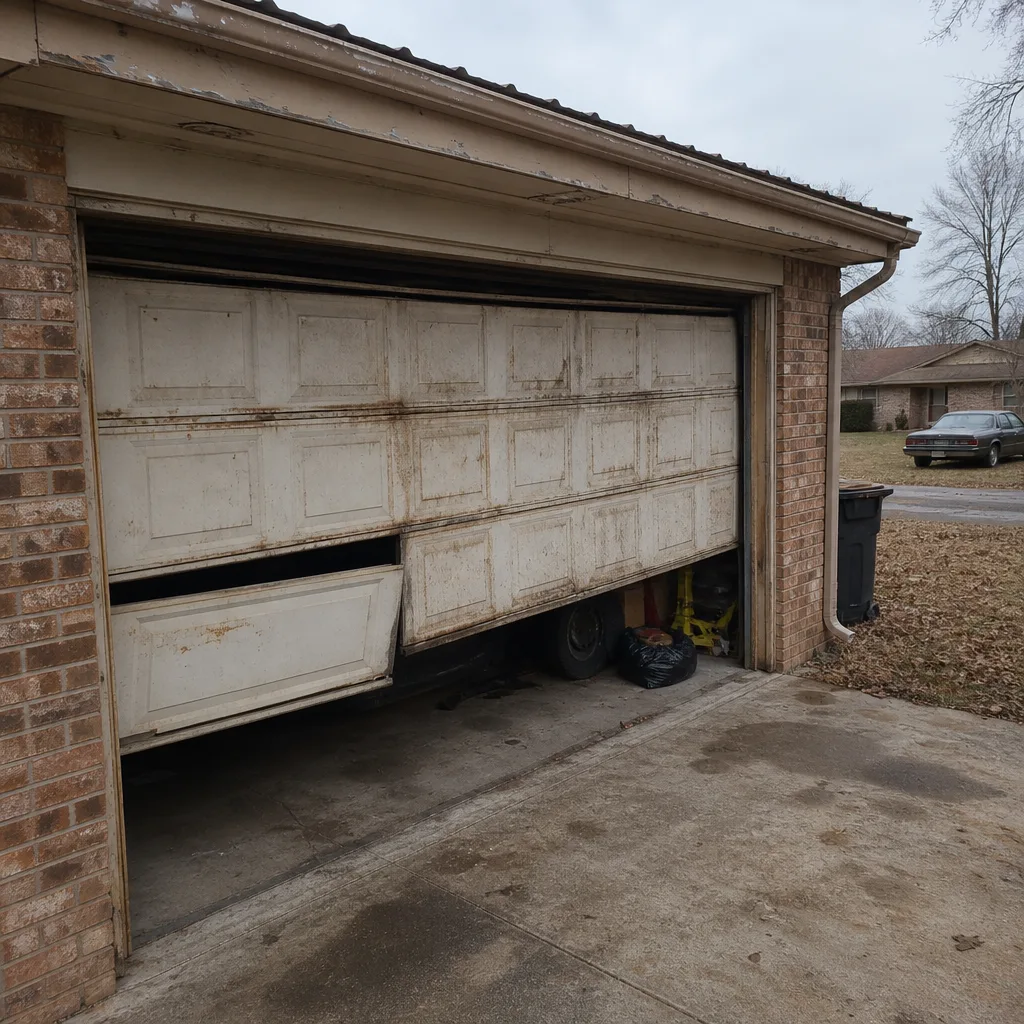 Before
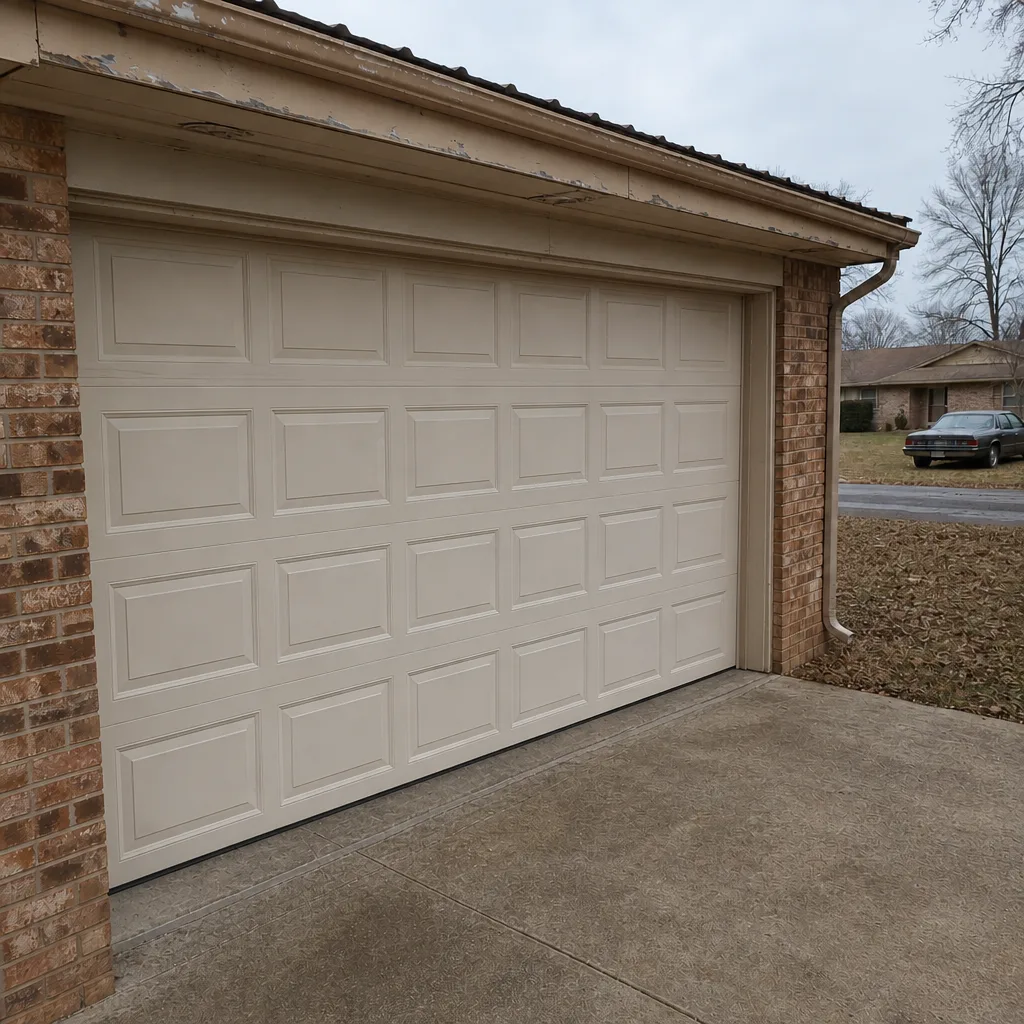 After
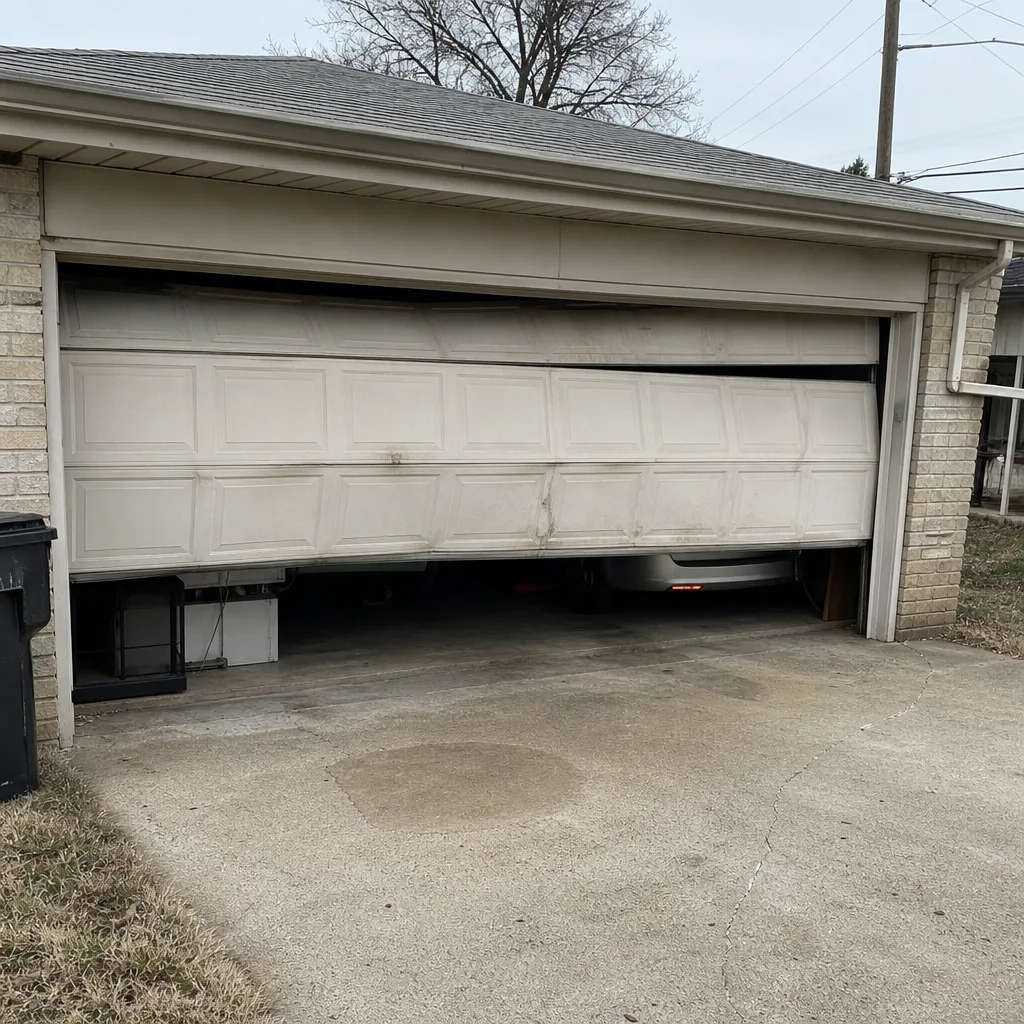 Before
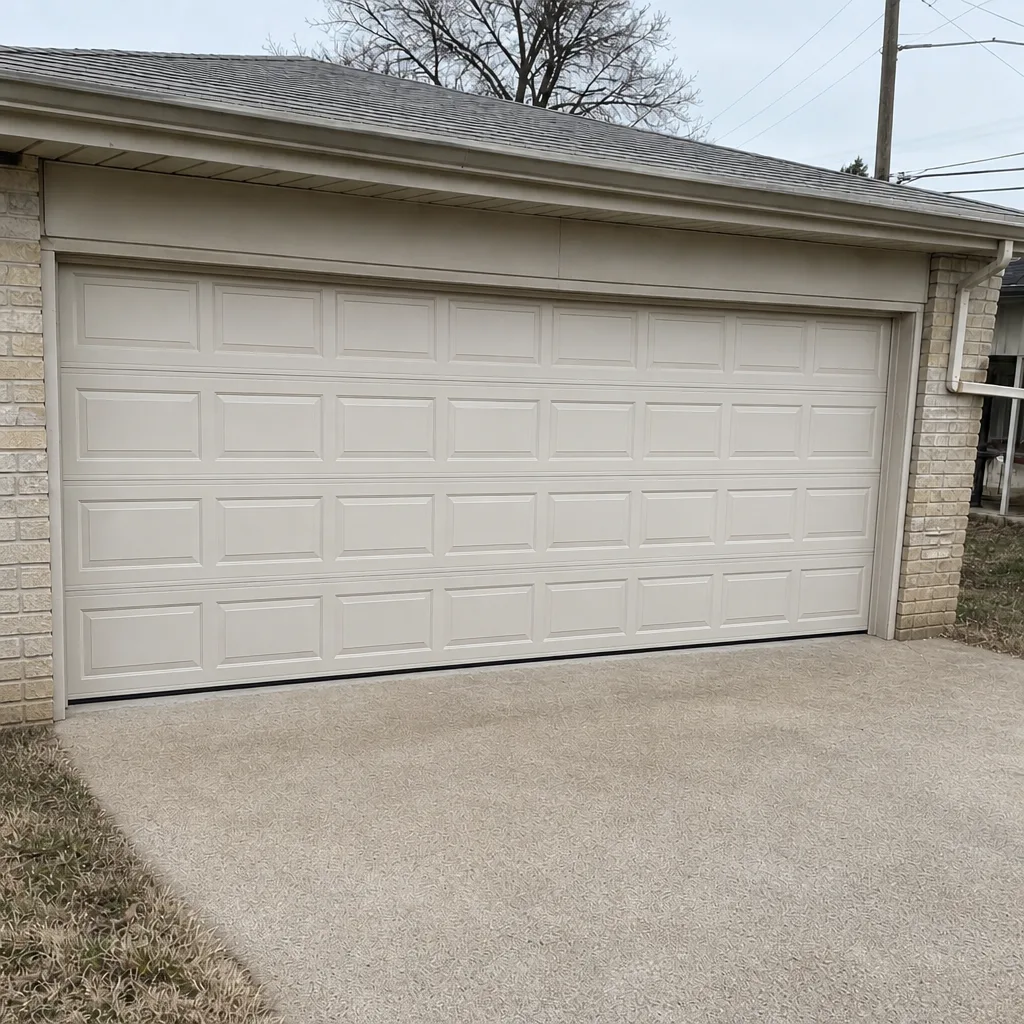 After
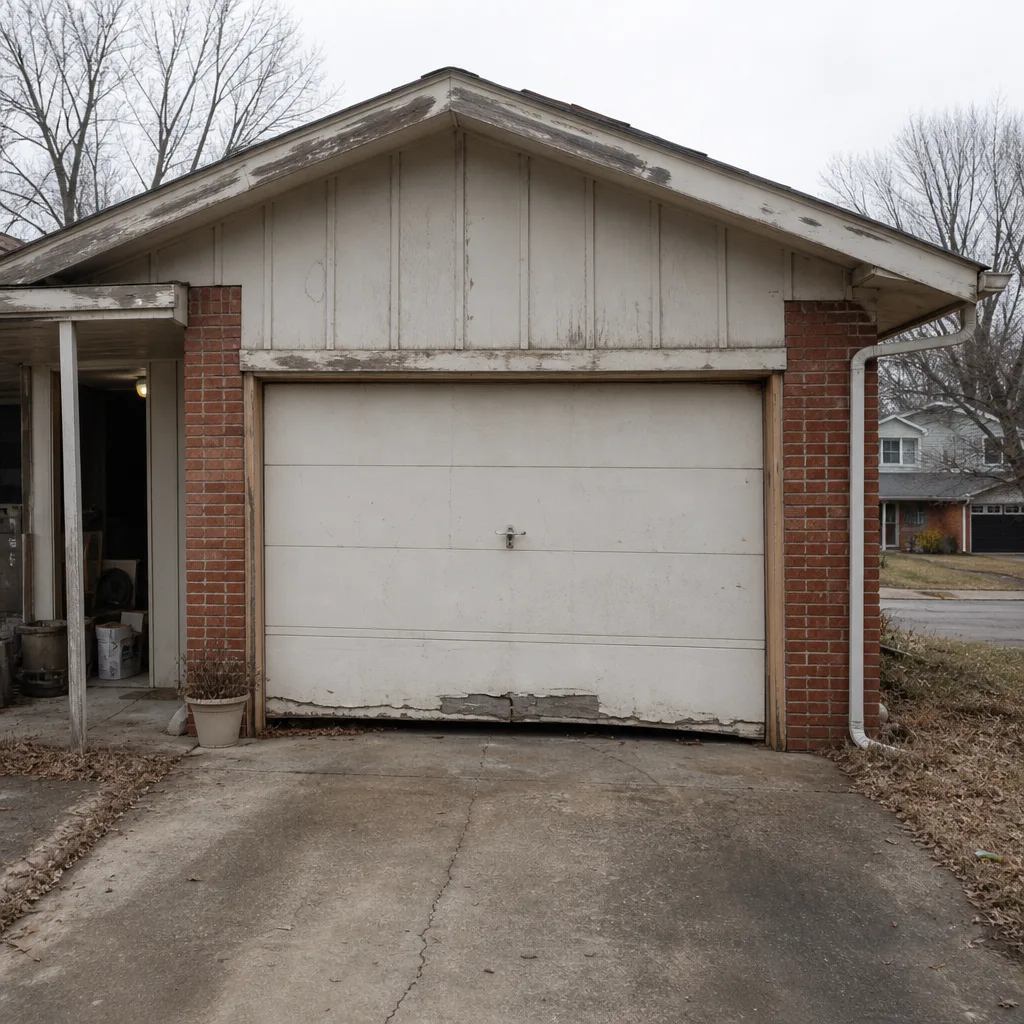 Before
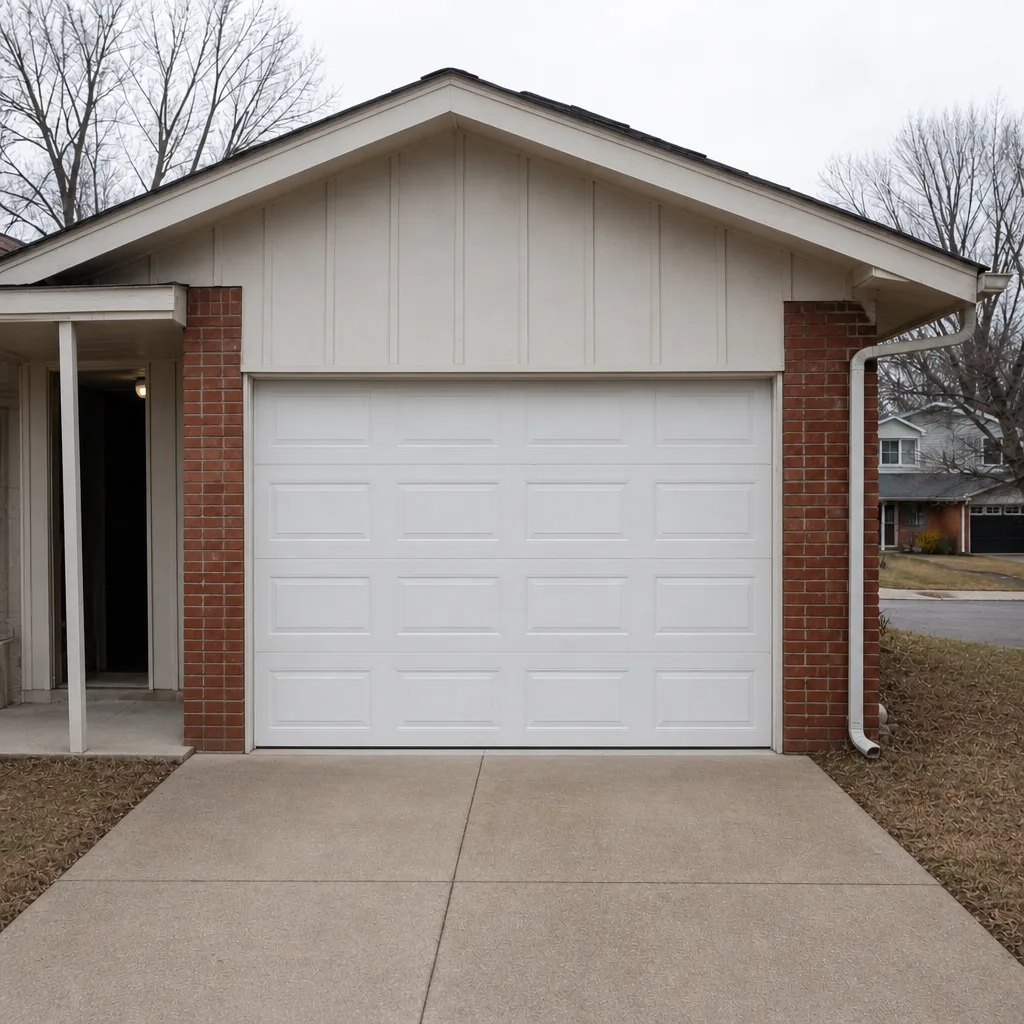 After
When to Call a Professional
Some garage door issues are safe to observe and log. Others need a trained technician immediately. A snapped cable is a serious hazard because the door can drop hard without warning. A spring with a visible gap or rust at the break point is hours or days from failing. A door that drifts more than six inches from the halfway point during the tension test has a spring problem that won’t improve on its own. A bent track, a cracked hinge, or a safety reversal system that fails the 2×4 test all require professional repair. If you’re in Oklahoma City and any of these conditions sounds familiar, Bellmont Garage Door Repair offers free estimates. Call (833) 842-7854. We answer 24/7. Fast dispatch from 7am to 7pm, Sunday through Friday.
Frequently Asked Questions
Twice a year is the baseline for most Oklahoma City homes, but three times a year is better if your door faces west or gets full afternoon sun. The heat breaks down lubricants faster on sun-exposed panels. Use a synthetic silicone or garage door-specific product, never petroleum-based grease or WD-40. Call (833) 842-7854 if you’re unsure which product to use for your specific door.
Cold temperatures increase metal brittleness, which is why most spring failures in Oklahoma City happen during the first hard freeze of the season. But the weakness was already there. Springs fail from metal fatigue accumulated over thousands of cycles, not from one cold day. If your door drifts more than six inches during a manual balance test, the spring tension is already compromised regardless of the weather.
Test the balance: disconnect the opener, lift the door to waist height, and release it. If it drops quickly or rises on its own, the springs are losing tension. A visual check also helps. Look for a gap in the coils of a torsion spring or rust eating into the metal. Both are signs the spring is near failure. Springs are usually replaced in pairs because both springs wear at roughly the same rate.
Yes. Oklahoma City’s red clay dust is a fine mineral abrasive that works into roller bearings and hinge pins, accelerating wear. Every door cycle grinds those particles against moving metal. The result is rollers that stop rolling, hinges that crack, and an opener that works harder than it should. Monthly dry wipes of the tracks are the cheapest insurance against this specific local problem.
Yes, the basic maintenance is safe and simple. Keep the photo-eye lenses clean, listen for changes in motor sound, test the force reversal monthly, and keep the drive system lubricated according to the opener type. Circuit board and drive system repairs are professional jobs. If you have a LiftMaster or Chamberlain with MyQ, the app often alerts you to force and travel issues before they become obvious.
In our experience, worn springs and failing rollers top the list. Both are exacerbated by Oklahoma City’s temperature swings and dust levels. The good news is that both can be caught early with the monthly walkthrough described in this guide. A specific description of what you’ve observed, along with temperature and date, helps a technician diagnose the problem on the first visit. For an exact quote on any garage door concern, call (833) 842-7854. We answer 24/7. Fast dispatch from 7am to 7pm, Sunday through Friday.
The Bottom Line
Oklahoma City garage doors face a specific set of conditions: red clay dust, extreme heat, hard freezes, and wind-blown grit. A generic maintenance checklist misses these. The routine in this guide is built around what actually happens to doors in this climate, organized by season so the right task happens at the right time. Most of it takes minutes a month. None of it requires touching high-tension springs or cables. The payoff is fewer breakdowns, cheaper repairs when they do happen, and a door that lasts years longer than it would have otherwise. When a problem does come up, write down what you observed, note the temperature, and call a specialist who works on the brand you already own. That’s how doors get fixed correctly the first time.
Written by the team at Bellmont Garage Door Repair, serving Oklahoma City since 2014.