
Last updated November 14, 2026
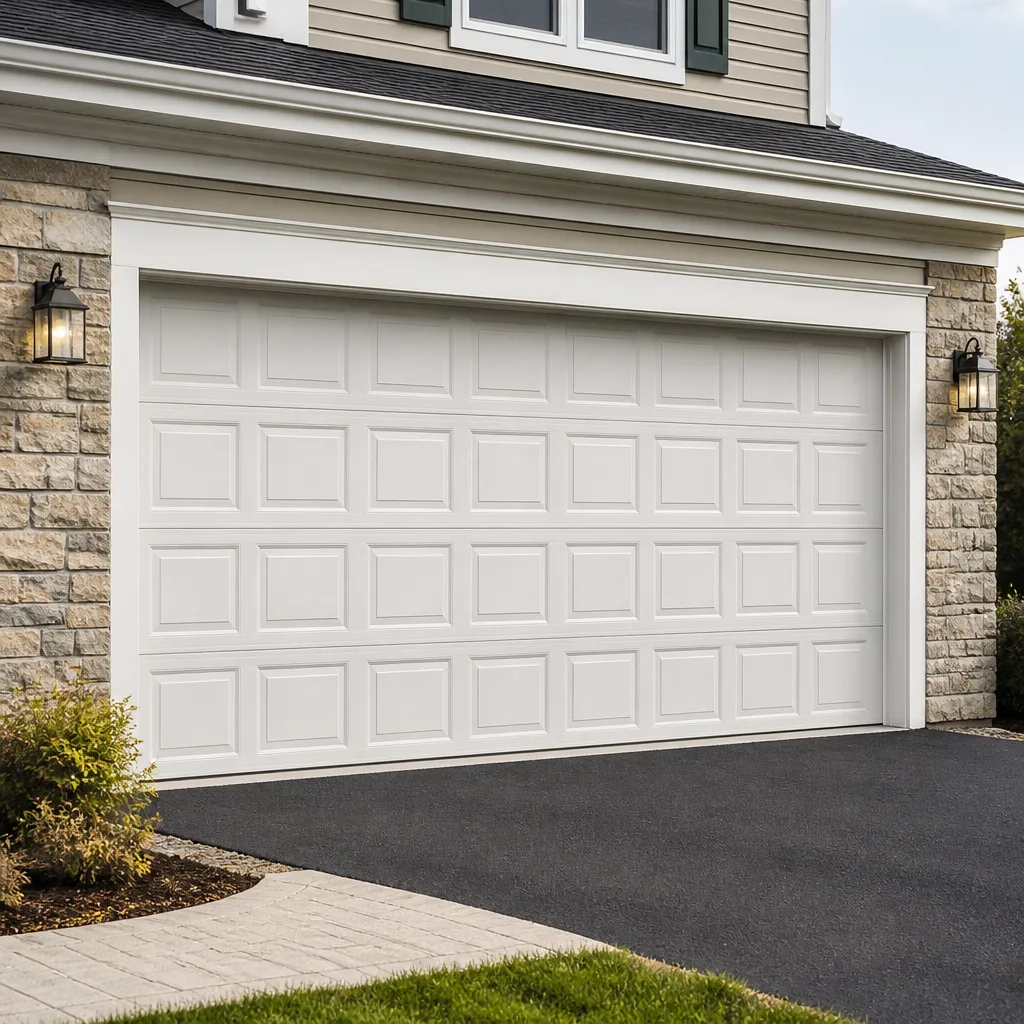 Raised-panel steel
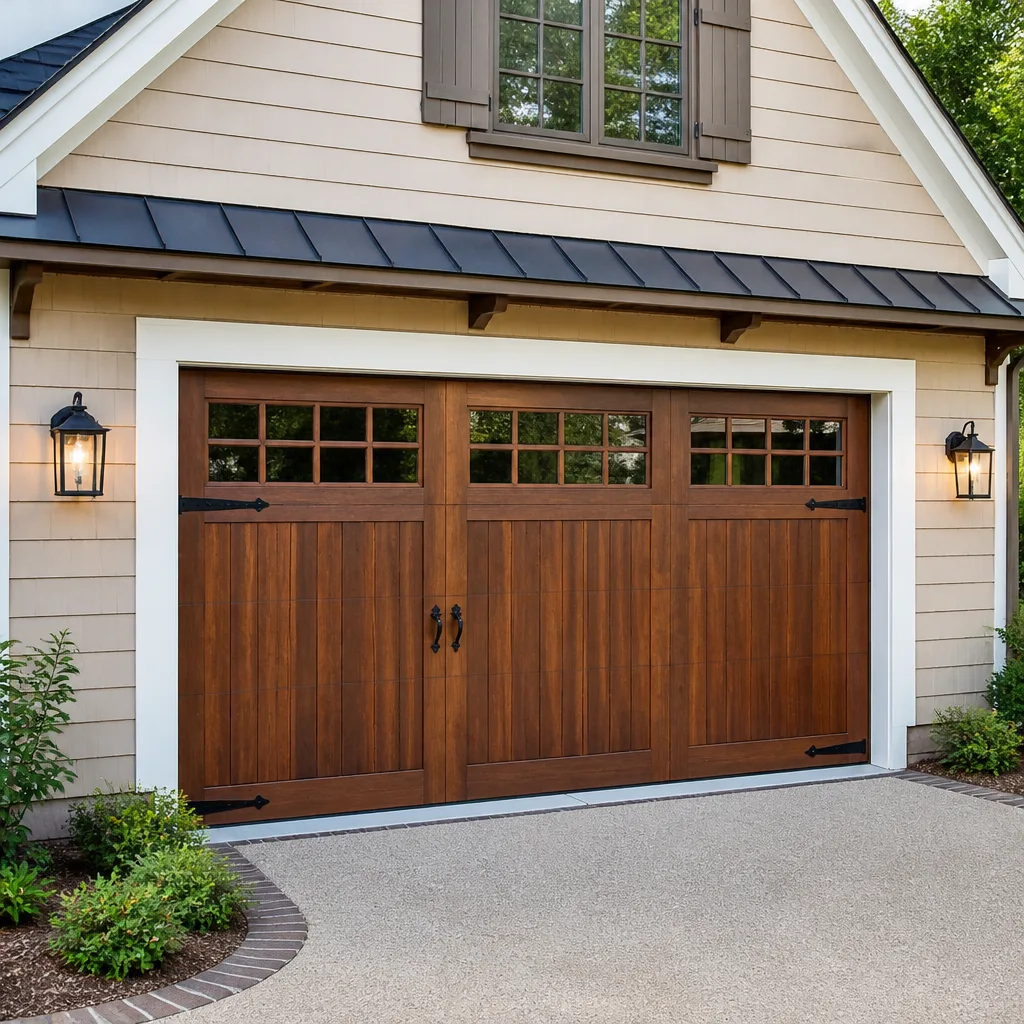 Carriage house
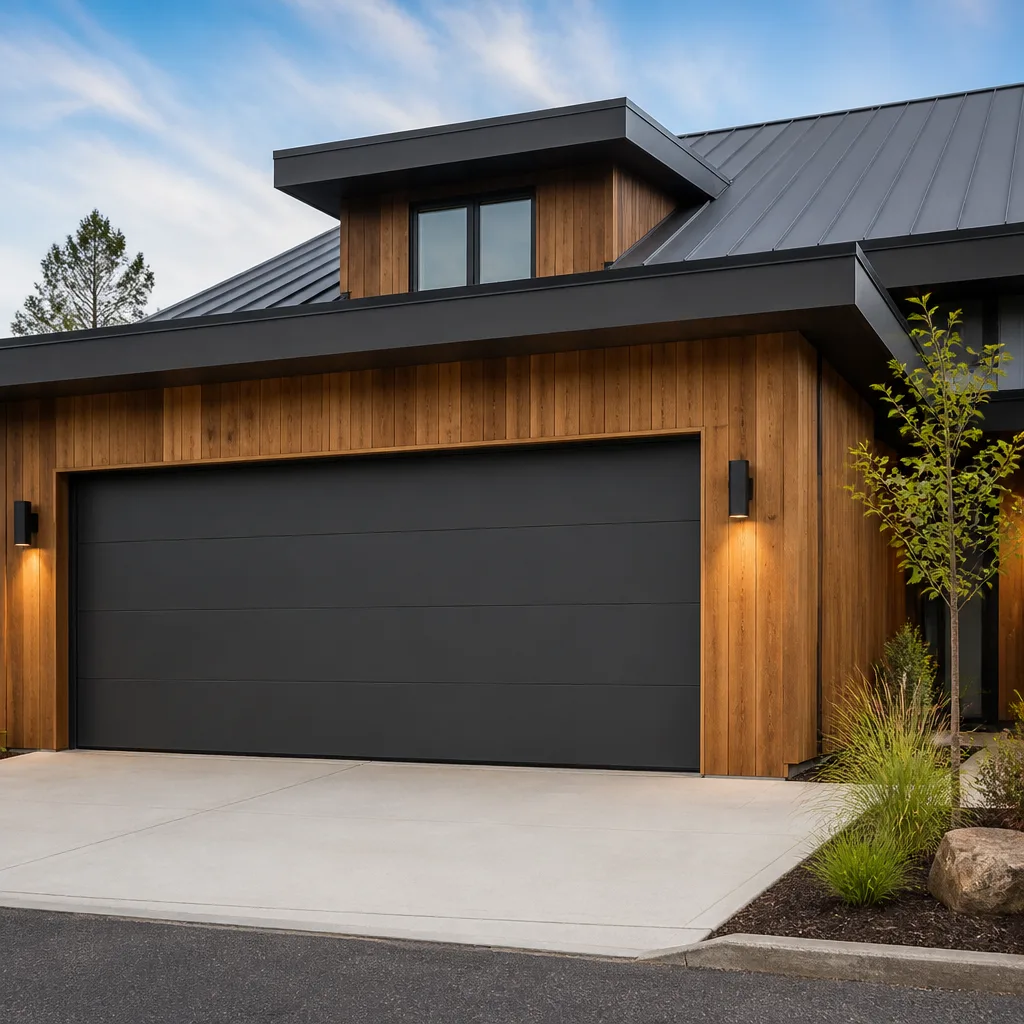 Modern flush
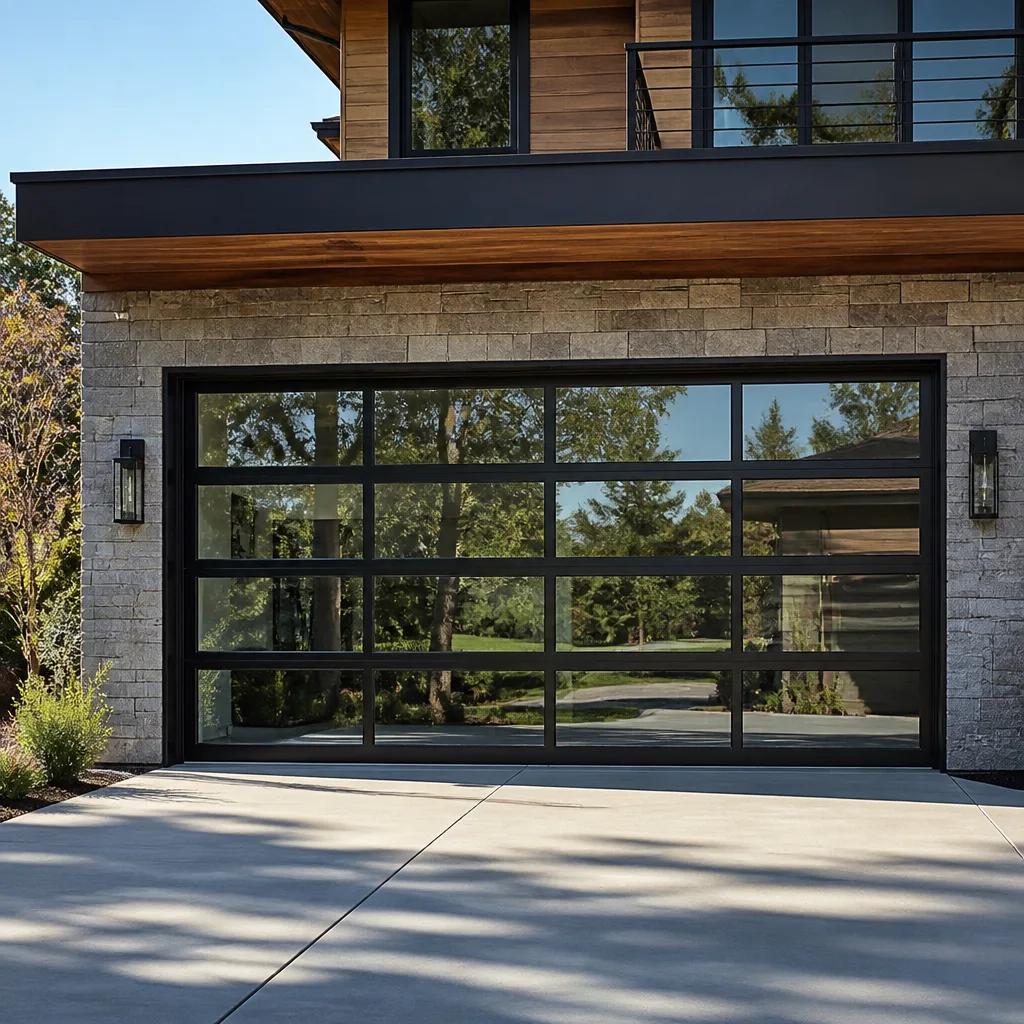 Full-view glass
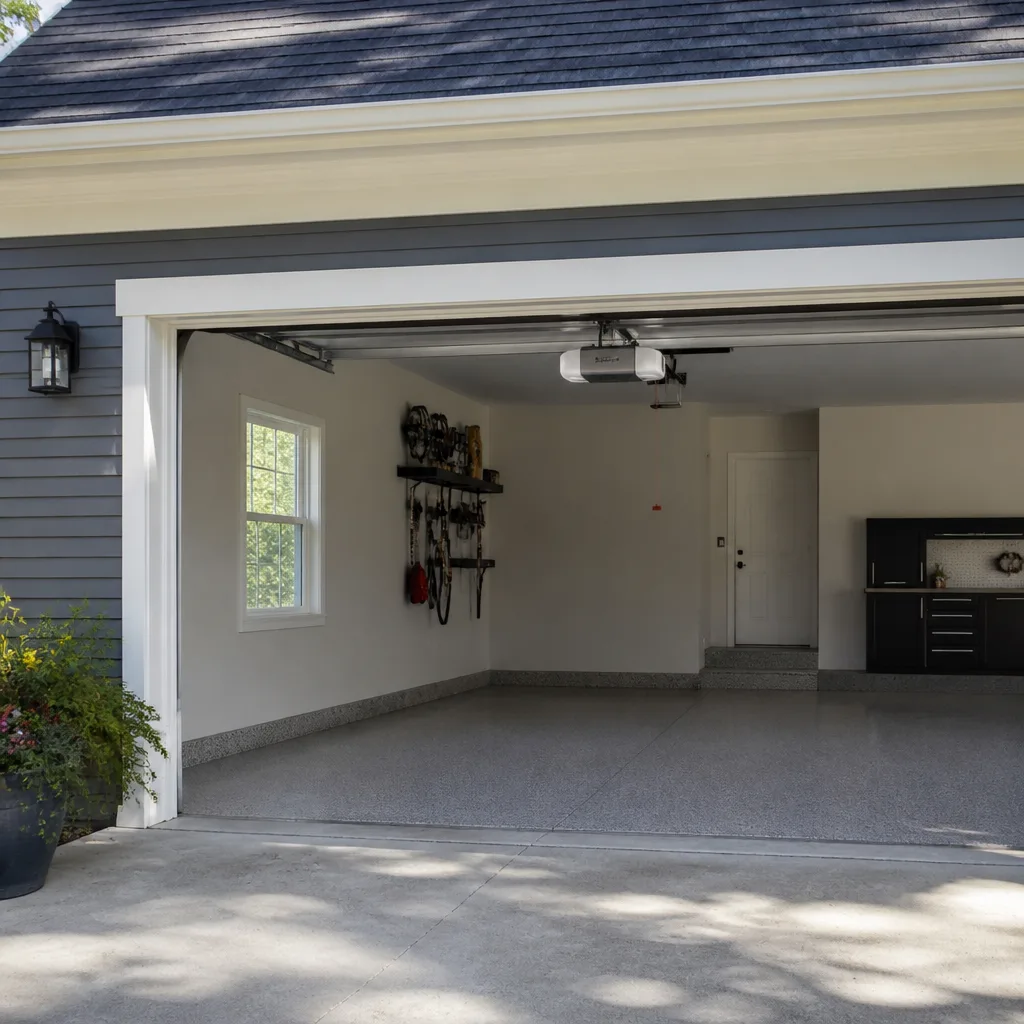 LiftMaster openers
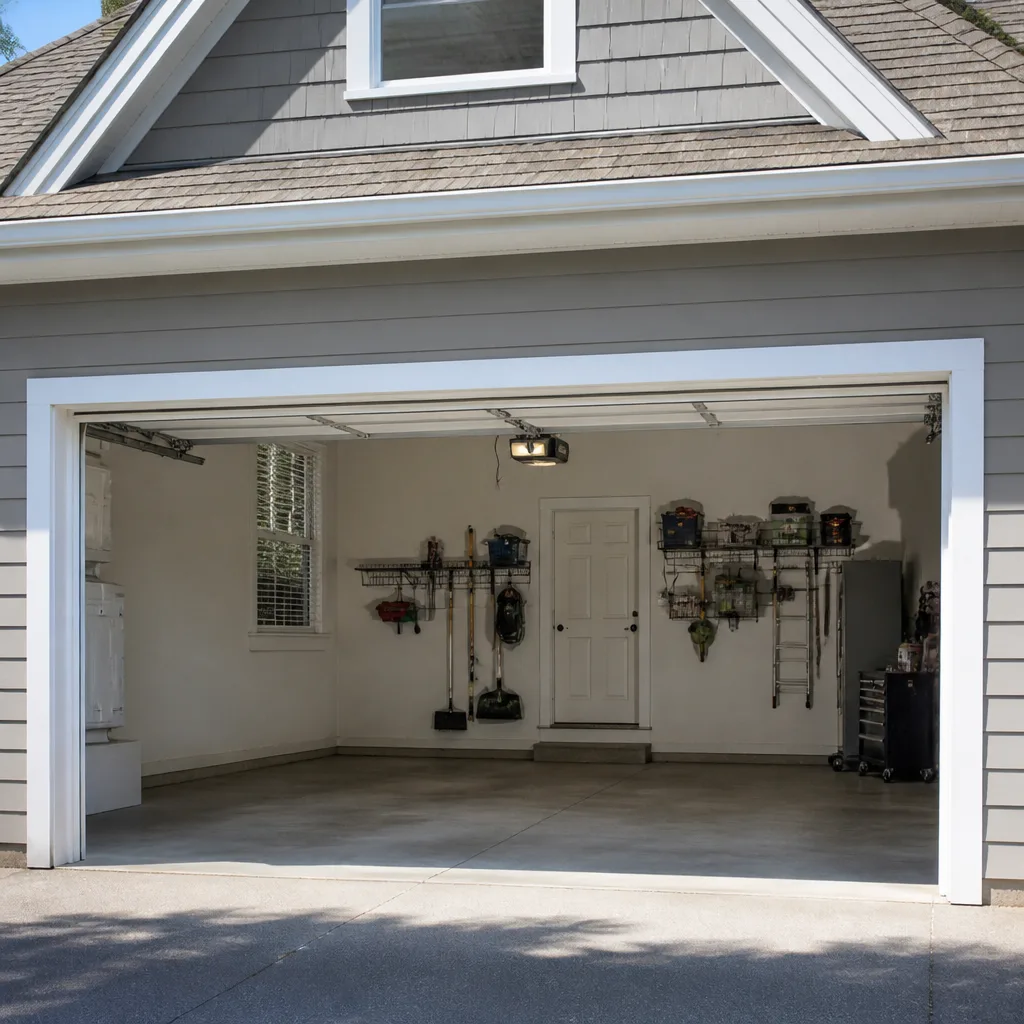 Chamberlain openers
Full 25-point door and opener safety check with every visit - springs, cables, rollers, tracks, and your LiftMaster or Chamberlain opener included
You get a price before we start. It does not change when the truck arrives.
Get your free estimateThe Complete Guide to Garage Doors in Oklahoma City
Most garage door guides read like they were written for a mild, stable climate. Oklahoma City is neither. Here, a single week in spring can swing from freezing to nearly ninety degrees, and the soil under your foundation moves more than the door above it. This guide treats Oklahoma City as its own environment, because the door that works fine in Dallas or Denver often fails early here. You’ll learn what OKC’s climate, soil, and tornado-season exposure actually mean for your door’s hardware, materials, and maintenance schedule, and how to make decisions that survive the next twenty hail seasons.
Quick Answer
Choosing and maintaining a garage door in Oklahoma City means accounting for three local realities: expansive clay soil that shifts tracks and frames over time, intense UV and hail exposure that punish the wrong finishes, and a tornado corridor where wind-rated doors stop being an upsell and start being common sense. The practical result is that material selection, track alignment checks, and seasonal spring calibration matter more here than in most markets. Bellmont Garage Door Repair specializes in exactly these conditions, working on LiftMaster, Chamberlain, Genie, Clopay, Amarr, Wayne Dalton, Craftsman, and Raynor systems across the Oklahoma City area.
Styles & brands we work with
- Raised-panel steel
- Carriage house
- Modern flush
- Full-view glass
- LiftMaster openers
- Chamberlain openers
Table of Contents
- How Oklahoma’s Climate Actually Affects Your Garage Door
- Expansive Clay Soil and Track Misalignment
- Choosing Door Materials for OKC’s UV and Hail
- Wind-Rated Doors: Not Just for the Countryside
- Seasonal Timing: Why Summer and Winter Installs Differ
- Neighborhood-Specific Installation Considerations
- A Maintenance Schedule That Fits OKC’s Weather Pattern
- Common Mistakes to Avoid
How Oklahoma’s Climate Actually Affects Your Garage Door
Oklahoma City’s weather doesn’t just wear a door down gradually. It attacks in cycles. The temperature swings here can exceed fifty degrees in a week, and that repeated expansion and contraction works on metal parts differently than a steady climate ever would. Steel panels expand in July heat and contract during January cold snaps. Rollers grind differently at 15°F than at 100°F. Grease that flows fine in October turns gummy in February.
The bigger issue is moisture cycling. OKC gets heavy spring rain, then long dry stretches in summer. Wood doors absorb that spring moisture and then bake dry, which is why wood garage doors in Oklahoma City tend to warp and split faster than the same door would in a more humid, stable environment. If you own a wood door and you’re noticing gaps at the corners, it’s not your imagination. It’s the local climate doing what it does.
What this means practically:
- Steel doors with a quality factory finish handle OKC’s swings better than bare or poorly primed steel.
- Wood doors need more frequent sealing here than the manufacturer’s generic schedule suggests.
- Springs and cables should be checked at least twice a year, not once annually, because temperature cycling accelerates fatigue.
Our technicians see the same patterns across Oklahoma City neighborhoods: doors that were installed correctly but never re-checked after a few extreme seasons. The fix is usually straightforward when caught early. Our garage door repair work in this market is often about correcting what the weather has slowly pushed out of alignment.
Expansive Clay Soil and Track Misalignment
Oklahoma sits on some of the most expansive clay soil in North America. That’s a geological fact that shows up in garage doors more than most people realize. Expansive clay swells when wet and shrinks when dry, and it does so unevenly. The soil under one side of your garage can move a quarter inch while the other side stays put. Multiplied over years, that movement tilts garage slabs, shifts door frames, and pulls tracks out of true.
Here’s what homeowners should watch for:
- Listen for a door that scrapes or rubs on one side but not the other. That’s often a track that’s no longer parallel to the door travel.
- Look for daylight or a widening gap between the bottom of the door and the slab on one side. A sloped or shifted slab leaves one corner low.
- Check whether the door hesitates or stutters at a certain point in its travel. That’s often a roller binding in a track that has moved.
- Notice if your door reverses unexpectedly. The safety sensors at floor level are particular about alignment, and a shifted frame can throw them off.
Track misalignment is not a cosmetic problem. A door that binds repeatedly puts uneven load on the springs and cables, and that shortens their life considerably. In extreme cases, the door can come off its track entirely, which is dangerous and expensive. If you’ve noticed any of the signs above, a professional track realignment in Oklahoma City is usually a same-visit job when the underlying issue is caught early.
One practical note: if your home sits on a slab foundation and you’re seeing recurring track issues every few years, the soil movement may be ongoing. In that case, a good technician will recommend checking alignment as part of regular service, rather than just fixing it once and calling it done.
Choosing Door Materials for OKC’s UV and Hail
Oklahoma City gets serious UV exposure and regular hail. Those two things rule out some door materials that work fine elsewhere. Here’s how the common options hold up here.
- Steel, 24-gauge or thicker: The workhorse for OKC. A good factory finish resists UV fading better than site-applied paint. Hail will dent thin steel quickly, but 24-gauge or thicker absorbs most Oklahoma hailstones without visible damage. This is our most common recommendation for Oklahoma City homes.
- Steel, 26-gauge or thinner: Cheaper upfront, but Oklahoma hail will find it. We see these doors dented after a single bad storm. If budget is tight, understand the tradeoff.
- Aluminum: Lighter and rust-resistant, but it dents more easily than steel. It suits homes where the garage door has significant glazing or a modern architectural look, but it’s not the first choice for hail country.
- Fiberglass: Holds finish well and won’t dent, but it can crack under a hard impact and it’s less common in this market. Limited availability means limited repair options later.
- Wood: Beautiful on the right home, but the lowest durability in OKC’s climate. You commit to regular sealing and maintenance. Without it, wood here warps and rots faster than in most states.
On insulation: in Oklahoma you’re insulating for both summer and winter. A door with a basic R-value helps in January, but it also keeps an attached garage from becoming an oven in July. That matters if your garage is attached to the house and you spend time in it. We install and service insulated steel doors from Clopay, Amarr, Wayne Dalton, and Raynor, and the question we hear most is whether insulation is worth it in Oklahoma City. The short answer: yes, if the garage is attached or you use it as a workspace. If it’s detached and you just park a car in it, you can make a case either way.
Wind-Rated Doors: Not Just for the Countryside
Oklahoma City sits in a wind zone that makes wind-rated doors a legitimate consideration for many homes, not just rural properties or lakefront builds. A wind-rated door is engineered, tested, and labeled to resist specified wind pressures. The difference involves heavier-gauge steel, reinforced sections, stronger track brackets, and sometimes additional struts across the back of each panel.
Here’s what to know about wind-rated doors in the Oklahoma City market:
- Standard doors can flex significantly in high straight-line winds, and that flexing can pop rollers out of tracks or bow panels permanently.
- A wind-rated door’s reinforcement is hidden inside or behind the panel, so it looks like a normal door from the street.
- The added structural strength also helps the door survive the pressure changes that come with nearby tornado activity, even when the door itself is not in the direct path.
- If your home’s garage faces a wide open area, a wind-rated door is a more serious consideration than it would be in a dense, tree-lined neighborhood.
This is not a scare tactic. It’s a recognition that a garage door is a large, flat surface. In Oklahoma City wind events, that surface takes real load. A properly specified wind-rated door from a brand like Wayne Dalton or Raynor costs more than a standard door, but in the right location it’s a sensible allocation of budget, not an upsell.
For opener work, the wind conversation is simpler. LiftMaster and Craftsman build openers that handle standard Oklahoma wind loads without issues, but the door they’re attached to must be structurally sound. A powerful opener on a flexing, unreinforced door is a bad combination. Learn more about our garage door opener repair services for any drive system issues.
Seasonal Timing: Why Summer and Winter Installs Differ
The season in which you install or adjust a garage door changes how the job should be done in Oklahoma City. This is a detail many national guides ignore entirely.
Summer installations: Steel expands in 95°F heat. A door installed flush and tight on a July afternoon will contract when winter arrives, and the gaps and tension will shift. A technician who knows this market will account for thermal expansion by setting clearances slightly differently and calibrating spring tension with allowance for the cooling that’s coming. Sealing is also trickier in summer, because sealants can cure too fast on hot surfaces. We use different application techniques in July than we do in January.
Winter installations: Cold steel is brittle, and the springs are stiffer. Torsion springs rated for a specific door weight behave differently at 30°F than at 80°F, and a good technician compensates by calibrating to the anticipated summer heat rather than the day’s actual temperature. Bottom seals also stiffen in the cold, so a seal that looks perfect on a freezing day may sit unevenly once the slab warms up.
Fall and spring: These are the goldilocks seasons for door work in Oklahoma City. Moderate temperatures mean materials are at their most predictable. The catch is that everyone knows it, so spring and fall are the busiest times for installation work across the metro. If your schedule allows flexibility, a late-summer or early-winter install can often be scheduled sooner.
The practical takeaway: don’t accept a garage door installation where the crew slaps the door in and leaves in an afternoon. Proper timing-specific calibration takes a little longer and makes the difference between a door that stays quiet and balanced for years and one that needs repeated adjustments.
Neighborhood-Specific Installation Considerations
Not every Oklahoma City garage is the same, and the differences are often tied to when and how the neighborhood was built. We work everywhere from established inner-ring districts to newer suburban construction, and the installation challenges vary accordingly.
In older neighborhoods like Nichols Hills, garages were often built in the mid-century era with solid but sometimes less-than-perfect framing. Brick openings may have settled over decades, and the rough opening is rarely perfectly square by the time a new door is being installed. That means the installer has to work with the existing structure carefully, shimming and adjusting so the new door operates smoothly without forcing the opening to accept something it was never shaped for.
In newer construction areas around Edmond and far northwest Oklahoma City, the framing is generally more uniform, but the building pace is fast. We see garages where the slab was poured recently and the structure hasn’t fully settled. Installing a door on a slab that’s still moving means a re-check six to twelve months later is often warranted, even if the initial install was perfect.
In mid-century brick ranch neighborhoods across central Oklahoma City, garage dimensions can be tight. Older doors were often 8 feet wide where modern cars have outgrown them. That’s a conversation about widening the opening, which is a structural job, versus working within the existing dimensions.
The point is that a garage door installation in Oklahoma City is not a one-size-fits-all exercise. A specialist who has worked across these neighborhoods understands what to expect before the first panel comes off the truck. We install Clopay, Amarr, Wayne Dalton, and Raynor doors on homes throughout the Oklahoma City area, and the approach changes based on the house, not just the door.
A Maintenance Schedule That Fits OKC’s Weather Pattern
Most garage door maintenance guides suggest a once-a-year check. In Oklahoma City, that’s not enough. The climate demands more attention, but the maintenance itself is straightforward. Here’s a schedule that works for this market.
- Every March: Post-winter check. Look for track alignment shifts from winter soil movement, check weather seals for cracking from cold exposure, and test the door balance by hand.
- Every June: Pre-summer check. Clean and inspect the photo eye sensors, which get dusty and misaligned as spring storms blow debris through. Check that the opener’s force settings haven’t drifted.
- Every October: Pre-winter check. Lubricate rollers, hinges, and springs with a lithium or silicone lubricant designed for garage doors. Check the bottom seal, which takes the brunt of cold air and moisture.
- After any hail storm: Walk the door and look for fresh dents, especially on the top panel which takes the most direct impact. Small dents are cosmetic. Larger or multiple dents can affect panel rigidity.
- After any high-wind event: Watch the door go through a full cycle. Pop-outs and binding often show up in the days after a wind event, not during it.
If you don’t do your own maintenance, that’s fine. A professional tune-up on an annual basis in Oklahoma City is a reasonable investment, and for some homeowners twice a year makes sense if the garage faces west or the door is an older model.
Common Mistakes to Avoid
- Ignoring minor scraping sounds. A door that scrapes on one side is telling you the track has moved. Ignoring it for a season in Oklahoma City soil conditions can turn a $150 alignment into a full track replacement.
- Choosing the cheapest steel gauge. Thin-gauge steel might survive in a mild climate, but Oklahoma hail will find it. The savings evaporate the first time a storm passes through.
- Lubricating with WD-40. WD-40 is a solvent, not a garage door lubricant. It cleans and then dries out, leaving metal parts worse off. Use a proper lithium or silicone garage door grease.
- Painting over a factory finish without proper prep. Factory finishes are baked on and UV-resistant. Site-applied paint is rarely as durable, and in OKC’s sun it will peel and look worse than the original finish ever would have.
- Replacing one spring instead of both. Springs wear as a pair. Replacing one means the other is on borrowed time, and in Oklahoma City’s temperature swings, that borrowed time is shorter than you’d hope.
- Skipping the post-install recheck on new construction. New slabs move. A six-month recheck catches small problems before they become big ones, especially on newer lots across the metro.
See the difference
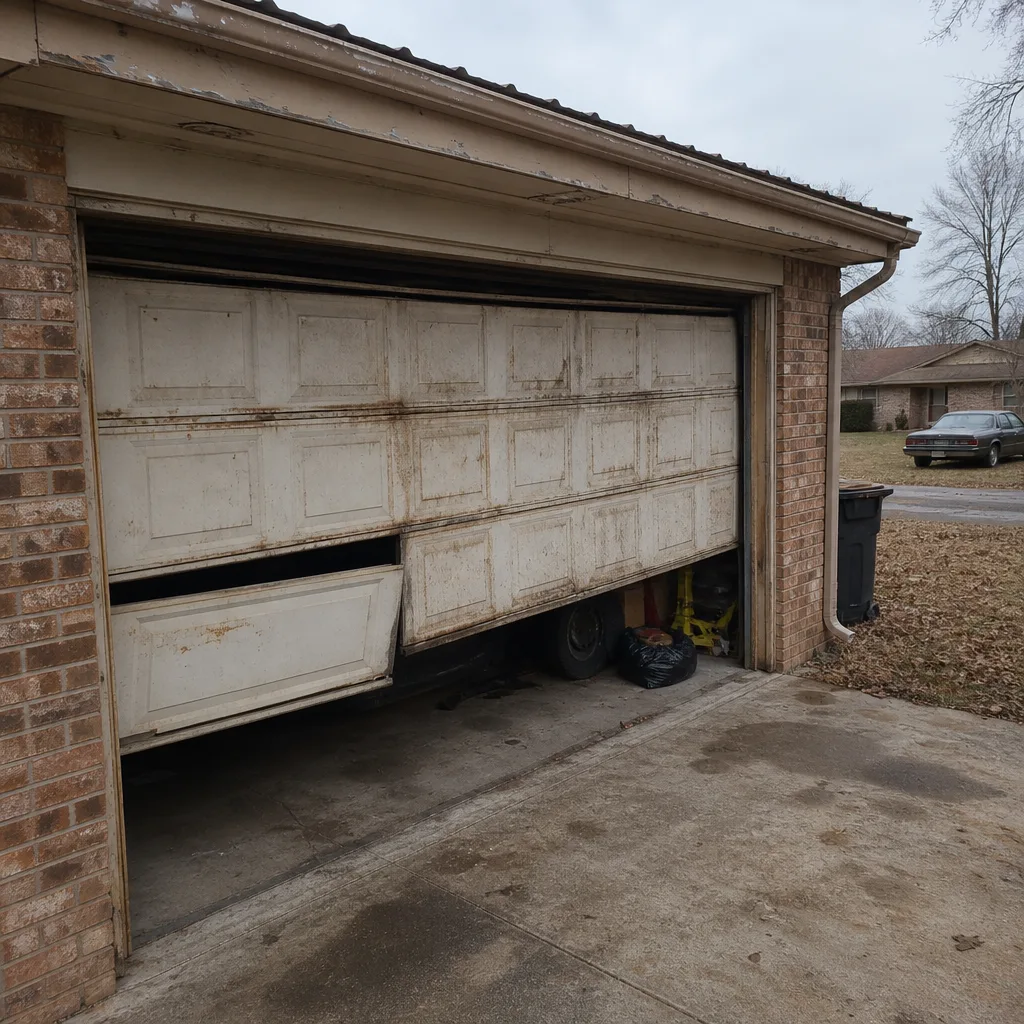 Before
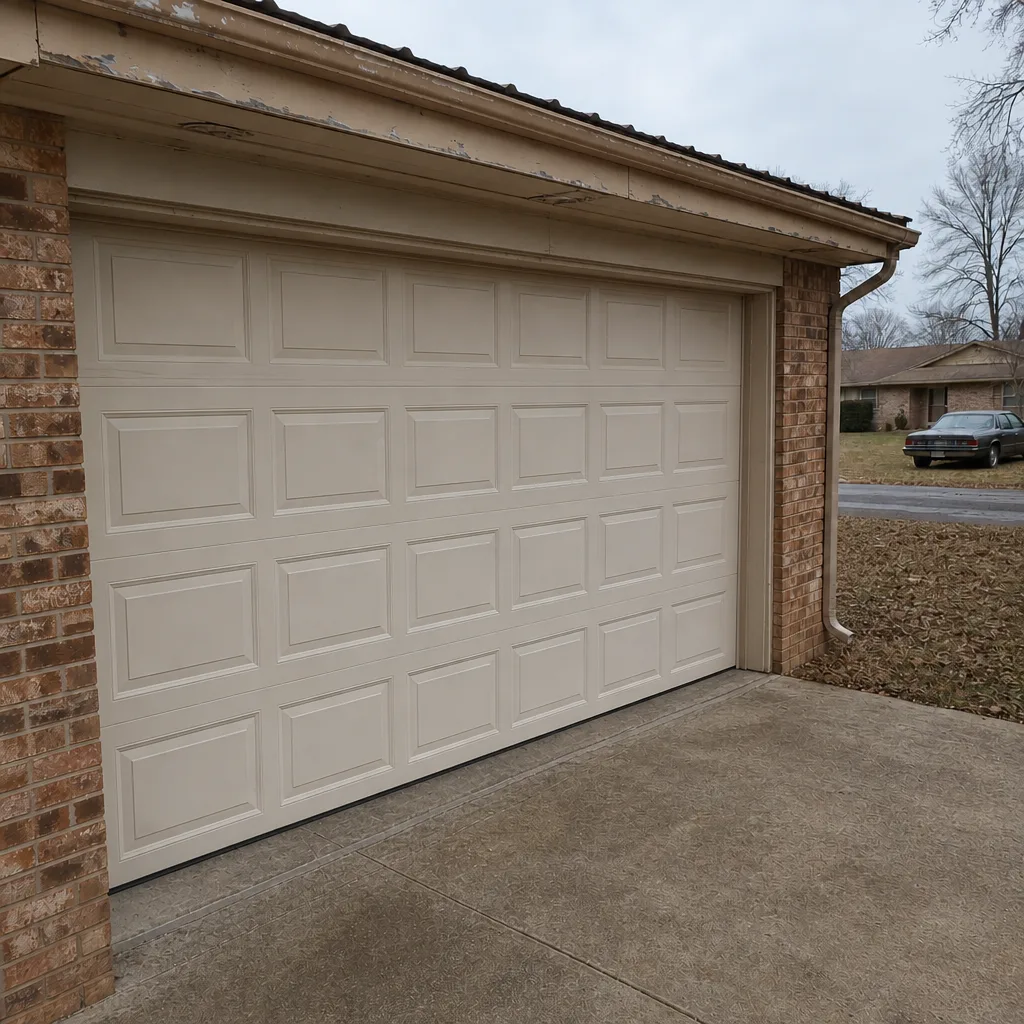 After
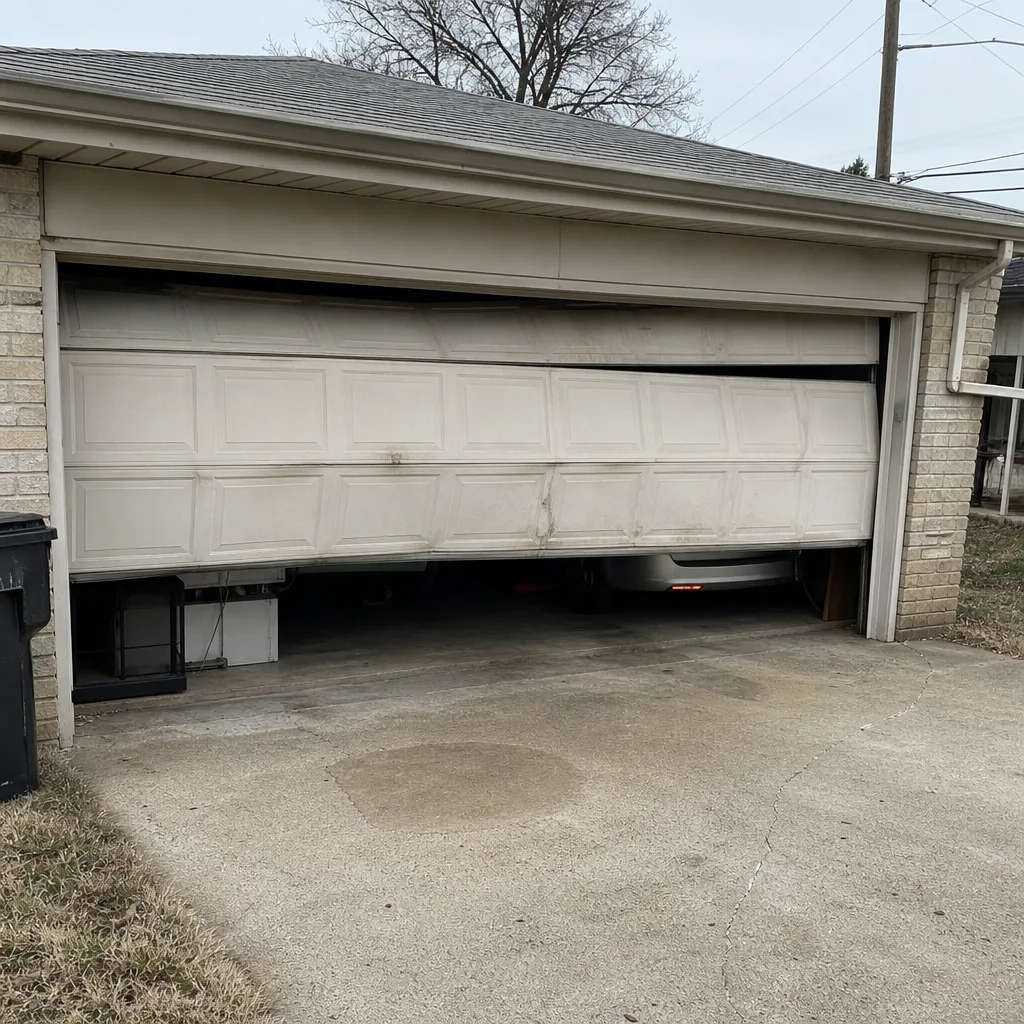 Before
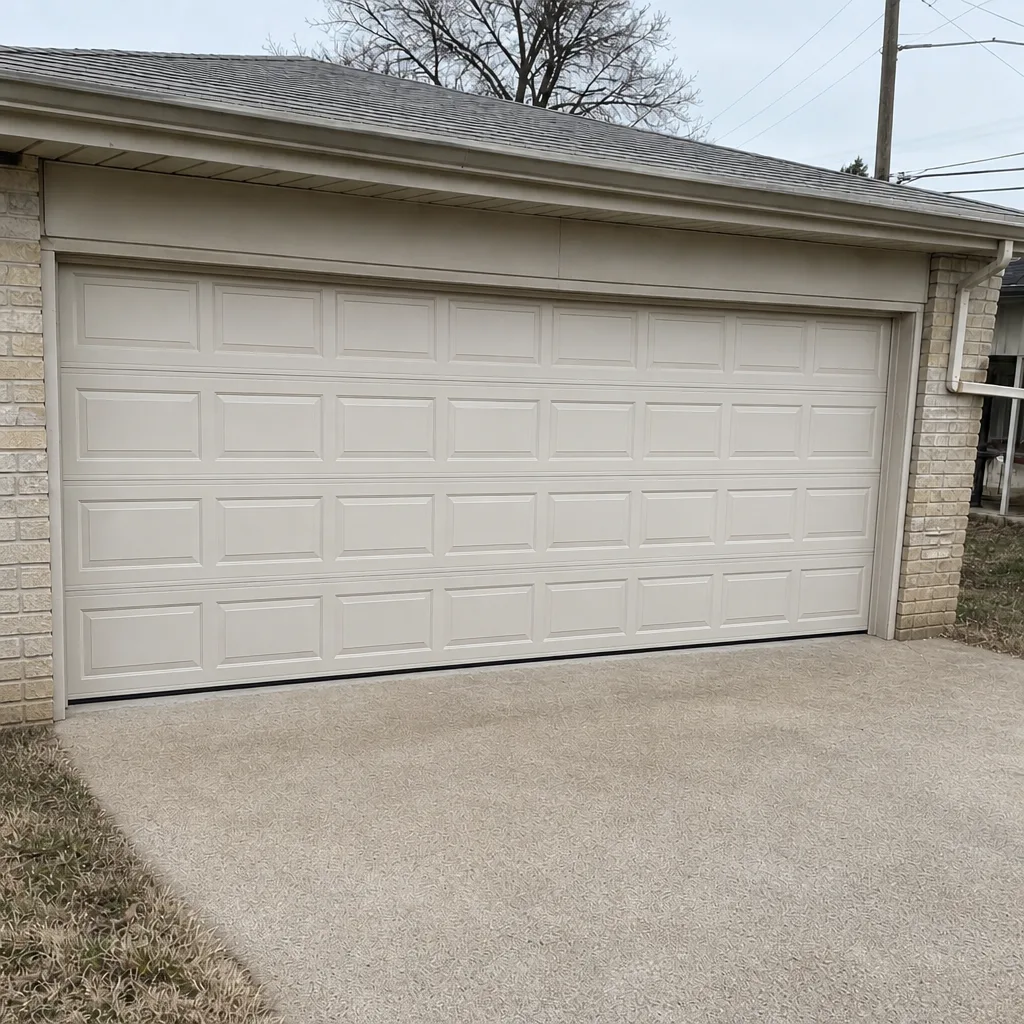 After
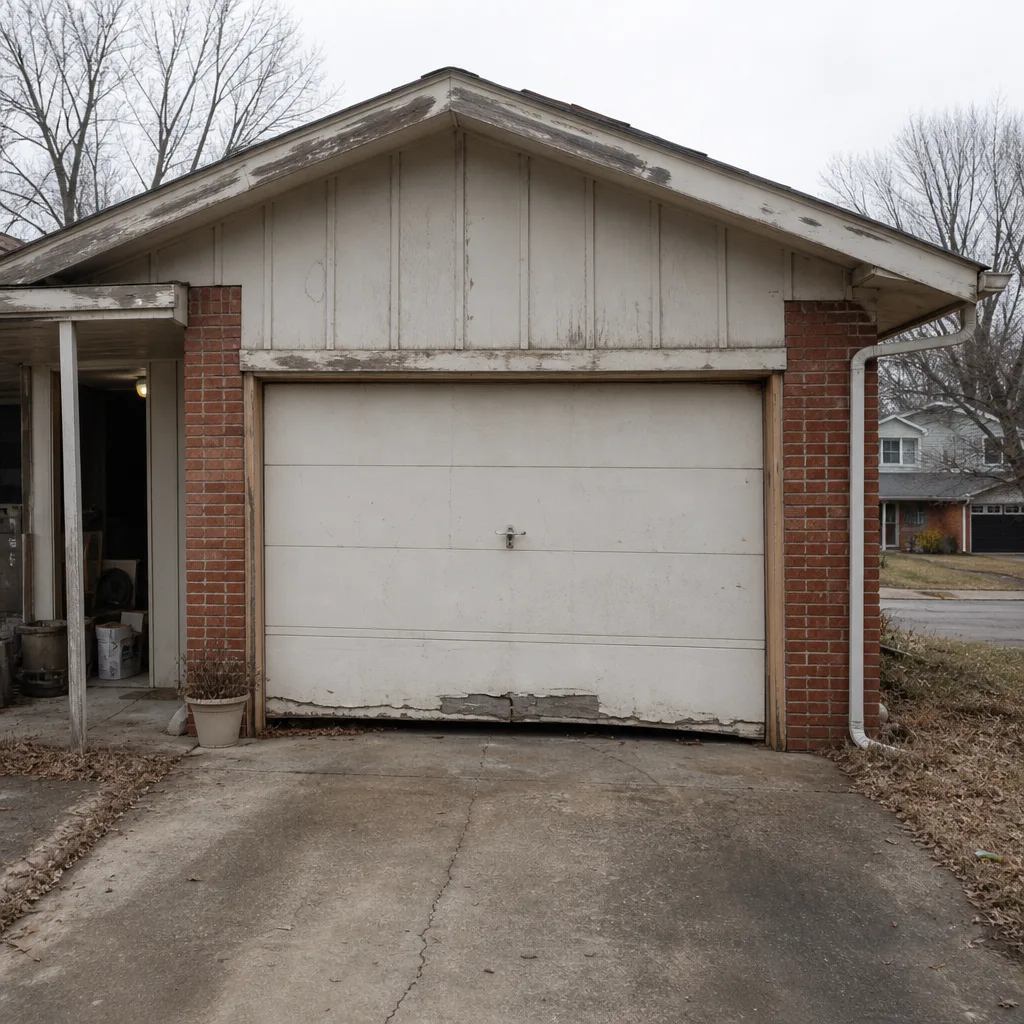 Before
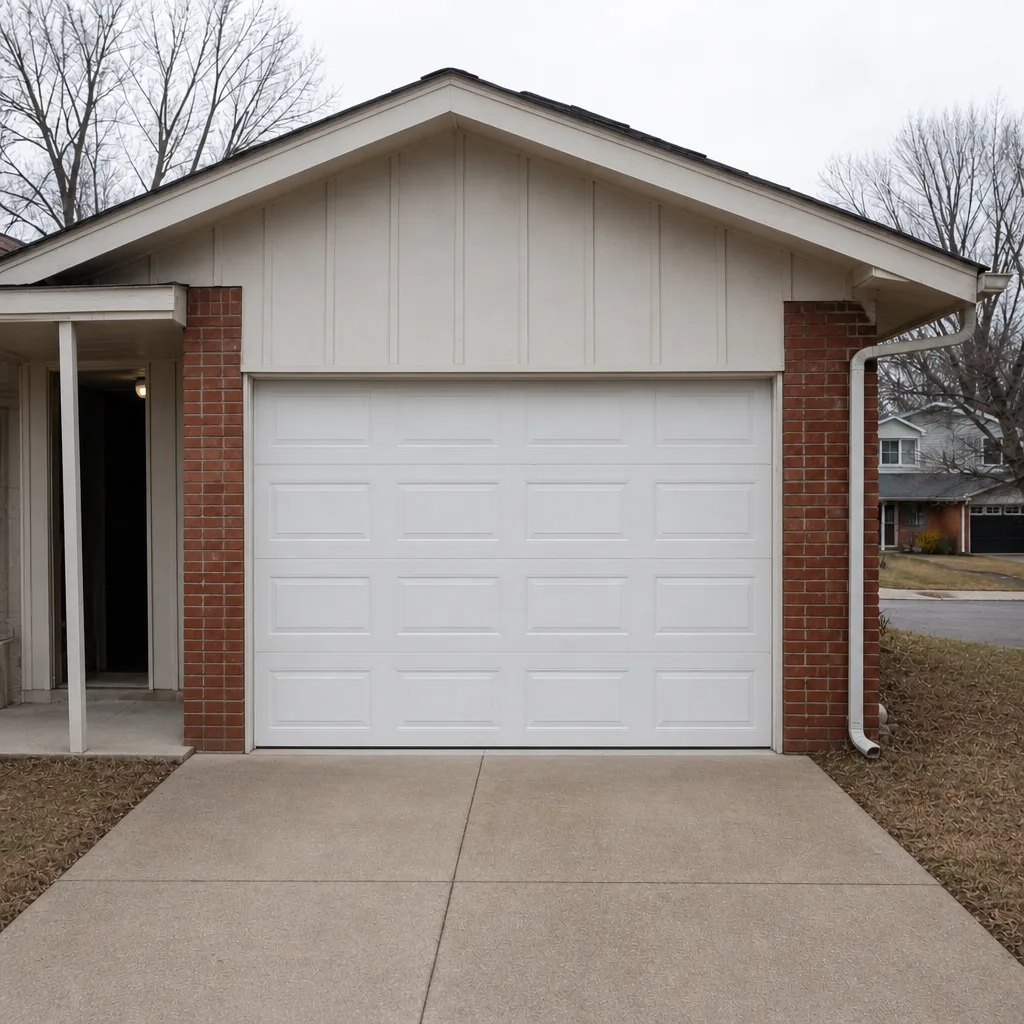 After
When to Call a Professional
There’s a line between maintenance you can do and work that needs a trained hand. Adjusting a photo eye sensor or tightening a loose handle is fine. Anything involving torsion springs – the big springs mounted above the door – is not a DIY job. Those springs hold enormous tension, and a sudden release can cause serious injury. Even experienced homeowners should leave spring work, cable work, and track realignment to someone who does it every day.
If your door is binding, squealing, refusing to open or close, or if you’ve noticed it’s crooked in the opening, call sooner rather than later. A door that’s left out of alignment keeps stressing its own hardware until something gives. Bellmont Garage Door Repair offers free estimates in Oklahoma City – call (833) 842-7854. We answer 24/7. Fast dispatch from 7am to 7pm, Sunday through Friday.
We work on the brand you already own. When a technician arrives who knows LiftMaster openers or Raynor doors from factory training, the diagnosis is faster and the fix is right the first time. From snapped springs to smart openers, Bellmont Garage Door Repair is focused on one trade, and it makes a difference.
Frequently Asked Questions
A typical garage door replacement in Oklahoma City runs between $800 and $2,500 depending on size, material, insulation level, and whether you choose a wind-rated model, with the written estimate setting the exact price before any work starts. Call (833) 842-7854 for a free estimate – we answer 24/7 and dispatch fast from 7am to 7pm, Sunday through Friday.
Installation is measured, ordered, and scheduled so the work is done correctly rather than rushed, and we’ll give you a free measure and a written price before anything is set. Call (833) 842-7854 to book a measure – we answer 24/7, and we’ll schedule the install into the next available opening, Sunday through Friday.
The price is quoted and agreed before any work starts, and the written estimate is the number you’re approving, so there are no surprises on the invoice. If we find something unexpected during the job, we’ll show you and agree on any change before proceeding – call (833) 842-7854 to talk it through.
Most common repair parts – including springs, rollers, hinges, and cables for the major brands – go out on the truck, so most repairs are finished in one visit. If your door needs a part we don’t have on hand, we’ll quote the complete job and set the follow-up before we leave.
For homes with a garage facing open exposure, a wind-rated door is a sensible investment rather than an upsell, because OKC’s wind events load large flat surfaces in ways standard doors aren’t reinforced to handle. The decision comes down to your lot, your exposure, and your budget.
Twice a year is the practical schedule for OKC’s climate – once in early spring after the soil has cycled through winter wet and dry, and once in fall before the cold sets in. A technician can catch track shifts, worn rollers, and tired springs before they become a door that won’t open at 7am.
The Bottom Line
Oklahoma City is hard on garage doors in ways that generic guides never address. The clay soil moves and takes your tracks with it. The summer sun and spring hailstorms punish the wrong materials. The wind loads are real and the temperature swings are relentless. But none of this is unmanageable. It simply means you choose materials with local conditions in mind, you check alignment twice a year, and you hire a specialist who knows this market rather than a generalist who’s learning it on your house. The door you already own can usually be kept running well with the right attention. When it’s time to replace it, buy for Oklahoma, not for the brochure.
Written by the team at Bellmont Garage Door Repair, serving Oklahoma City since 2014.